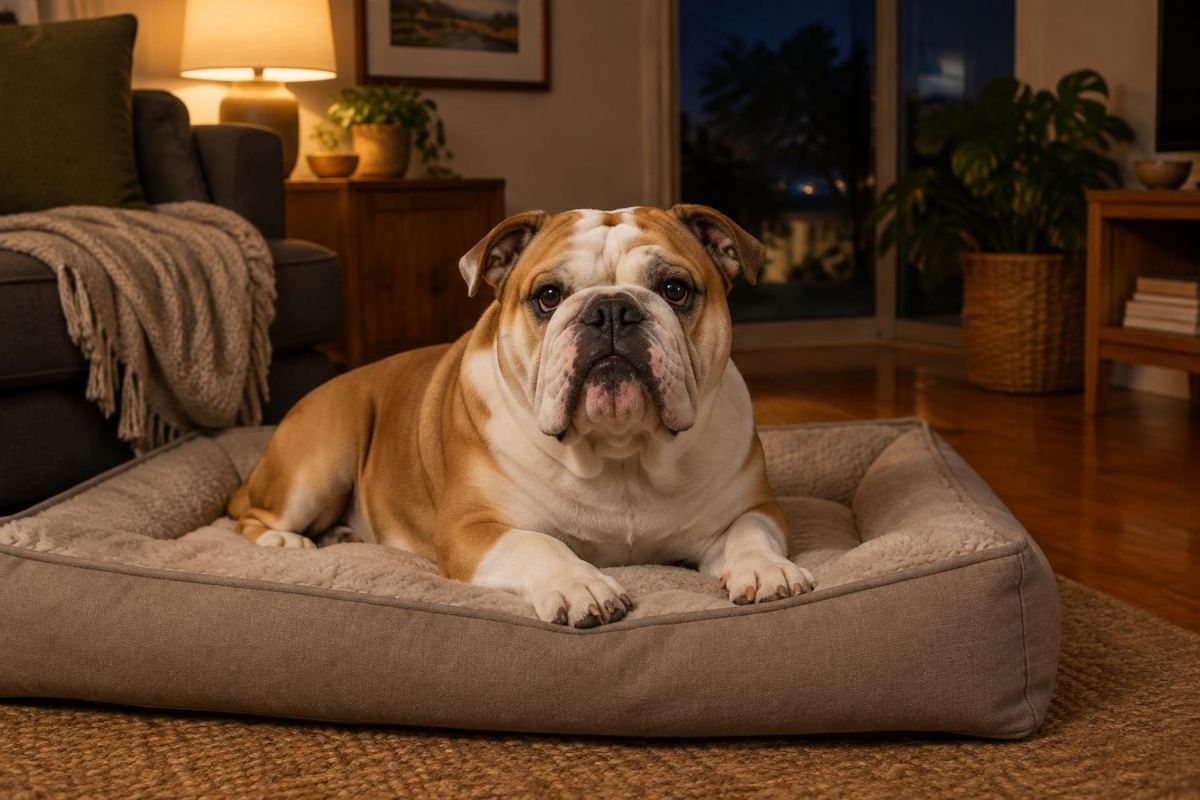

Quick answer
Most bulldogs that won't settle in the evening haven't had enough to do during the day, are too warm, or don't yet have a predictable bedtime routine and a bed they're used to. But flat-faced dogs are also prone to breathing problems during sleep, so loud snoring, pauses in breathing or a dog that keeps waking and shifting are worth raising with your vet. Sort out the routine and the room first, and get breathing checked.
What it looks like
Sound familiar?
- Zoomies the minute everyone sits down after dinner.
- Pacing, flopping down, getting up again, and not staying in bed.
- Waking in the early hours, then getting on and off the bed and not sleeping for long.
- Not winding down at all, and panting more than usual.
- Crying in the crate for the first hour.
- Snoring loud enough to wake themselves up.
Most of these are ordinary. Loud snoring and constant waking are not, and the vet list below explains why.
Why it happens
They still have energy (or frustration) to burn
The RSPCA notes that dogs without enough stimulation can feel frustrated, and that regular exercise and enrichment such as puzzle toys, scent games and sniffing on walks help reduce boredom and stress. A bulldog that has spent the day asleep while you were at work may simply be ready to go at 8 pm. Evening zoomies, short bursts of running, spinning and rolling, are usually normal and are often set off by excitement or a sudden rise in stimulation.
The evening routine works against sleep
The RSPCA's advice on settling dogs at night is to feed the main meal about two hours before bedtime and take the dog out to toilet as late as possible. Dinner at 9 pm, or a big play session right before lights out, makes it harder for a dog to wind down. A dog that needs to toilet will also keep getting up.
They're too warm
The RSPCA lists restlessness and agitation among the signs of heatstroke, along with relentless panting and heavy drooling. It also notes that flat-faced breeds have real difficulty breathing because of their short muzzles and are at much higher risk of heatstroke than other breeds. On a humid Queensland night, a bulldog in a stuffy room or on a thick, warm bed may get up and move around simply because it can't get comfortable.
Breathing during sleep
This is the one flat-faced owners most often miss. Researchers at the University of Helsinki found that short-nosed dogs had far more sleep-disordered breathing events than long-nosed dogs, and snored more. They noted these blockages happen as the airway muscles relax in sleep, and can lead to broken sleep. The University of Cambridge vet school says snoring and snorting are signs of airway obstruction, that dogs with a normal airway breathe quietly, and that pauses in breathing during sleep can be seen in affected dogs. The RSPCA puts it plainly: these breeds often snore so much because they are struggling to breathe. And a Royal Veterinary College study found many owners of affected dogs did not believe their dog had a breathing problem at all.
Discomfort, pain or age
VCA Animal Hospitals notes that painful conditions such as arthritis can stop a dog finding a restful position, that a cough only at night still needs attention, and that in older dogs night-time restlessness may relate to cognitive changes. These are all vet questions, not routine fixes.
They haven't learnt to switch off
Settling is partly a learnt skill. VCA describes teaching a dog to settle on a mat by rewarding relaxed postures and slowly stretching the time between rewards. Ohio State University's crate advice is similar: build positive associations and never use the crate as punishment. A dog with no clear resting spot of their own will often keep following you around.
When to talk to your vet
- Loud snoring, snorting or noisy breathing, especially if it's getting worse
- Pauses in breathing while asleep, or waking with a gasp or snort
- Struggling to get comfortable, sleeping sitting up, or constantly changing position
- Blue, very pale or very red gums or tongue, or collapsing
- Heavy, relentless panting, drooling or agitation on a warm night
- Coughing at night, or after lying down
- Stiffness, limping or yelping when lying down or getting up
- An older dog newly pacing, seeming confused, or with a changed sleep pattern
If you see any of these, call your vet.
Keep in mind that the breathing signs are easy to dismiss as just how bulldogs are. A short phone video of your dog asleep is useful to show your vet.
The tools that help
The routine and the room matter more than anything you buy. A cooler sleeping spot, an earlier dinner, a proper sniff walk and a settle routine will do most of the work. Once those are in place, a bedtime toy can become part of the routine. Here's what we use with our own dogs. You'll find all of them on our Won't settle page.
These are soft toys for quiet time in bed, not chew toys. Bulldogs can be heavy chewers, so check the toy regularly and take it away if it's being pulled apart.
GURU Comfort Plush Dog Toy (Bear or Frog, Medium)
A soft, medium plush your dog can carry to bed and rest their chin on once they lie down. Giving it only at bedtime makes it part of the lights-out routine, which helps your dog learn the pattern.



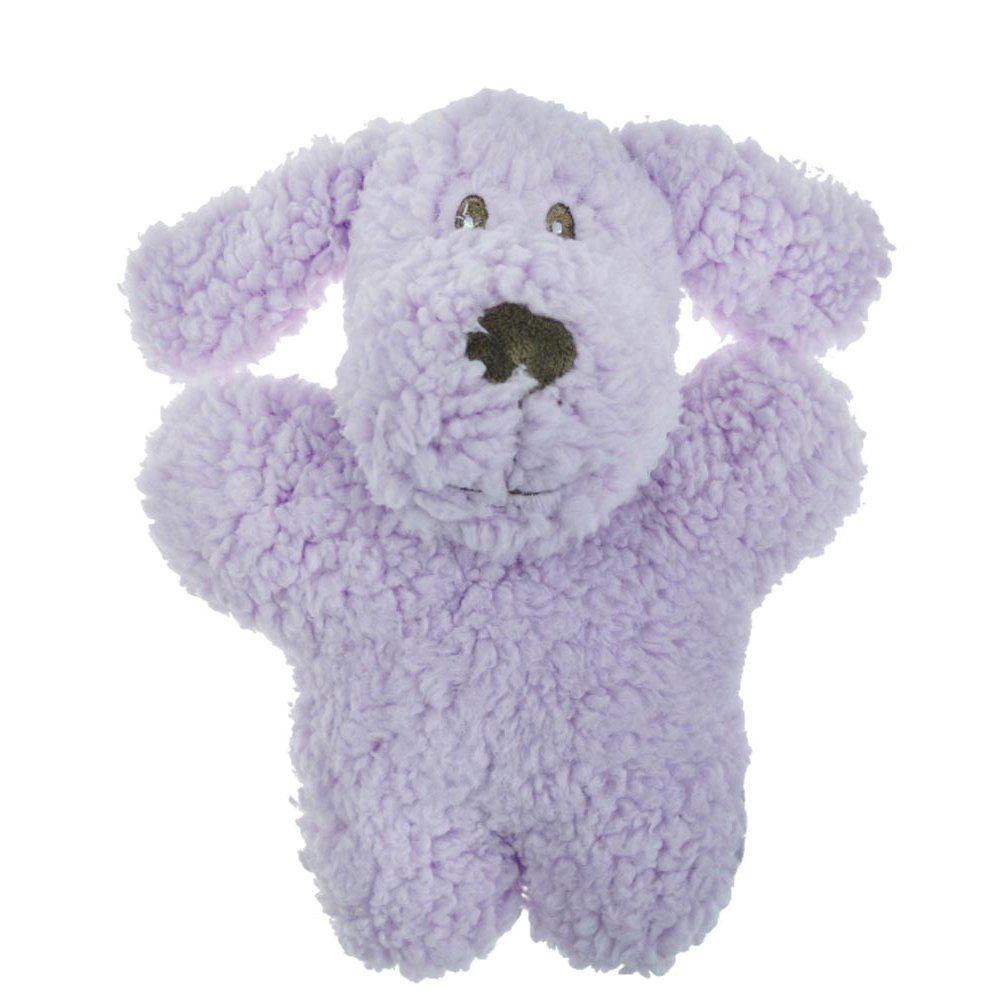
GURU Soft Scents plush toys (Bear or Pig)
Same idea, with a scented toy. It's for quiet time in the bed, not for chewing, so it suits dogs that will lie with a toy rather than shred it. Keep it in the bed or crate so it becomes part of that spot.
A purple dog-shaped fleece toy, 24 cm, for carrying and gentle play. Check the seams and take it away if it is damaged.
If your dog's evenings are really about leftover energy, start with the Needs to burn energy page. If heat is the issue, see Too hot to walk for indoor ideas on hot days.
Step by step
- Day 1: Get the breathing question answered. Film your dog asleep for a few minutes. If you hear loud snoring, see pauses or see them sleeping sitting up, book a vet visit before you work on anything else.
- Day 1: Fix the room. Choose a cool, shaded, well-ventilated sleeping spot with fresh water. On warm nights, use a fan or air conditioning, and swap a thick, warm bed for something thinner.
- Day 1: Move dinner earlier. Feed the main meal about two hours before bedtime, and do the last toilet trip as late as you can.
- Days 2–3: Add a proper sniff session. In the cooler part of the day, give a slow walk where your dog is allowed to sniff, or a food puzzle or scent game indoors. Avoid hard exercise in heat and humidity.
- Days 2–7: Teach "settle" on the bed. Sit near the bed, wait for your dog to lie down, and quietly drop a treat between their front paws. Reward the most relaxed postures (head down, rolled onto a hip). Say "settle" as they soften. Keep sessions short.
- Week 1: Build a wind-down hour. After the evening sniff, keep things quiet: lights down, no rough play, no squeaky toys. Then the toilet trip, the bedtime toy, and the "settle" cue on the bed.
- Week 1: Don't reward the night-time cries. If your dog cries in the crate or bed and you know they're comfortable and toileted, wait for a quiet moment before going to them, and calmly reward the quiet.
- Week 2: Stretch it out. Gradually lengthen the time between treats on the bed until you're giving none, and practise "settle" in other rooms or while you watch TV.
- Ongoing: Keep a short log. Note bedtime, room temperature, walks and how the night went. If things aren't improving after a couple of weeks, or anything in the vet box shows up, take the log to your vet.
Free plan
Free: The Settle-Down Routine. Printable, one page.
FAQ
Is it normal for my bulldog to snore?
Common, but not normal in the sense of harmless. Cambridge vet school says snoring is a sign of airway obstruction and that dogs with a normal airway breathe quietly. Mention it to your vet.
Why does my bulldog get the zoomies at night?
Zoomies are usually normal bursts of excitement. If they happen nightly, look at how much sniffing, play and enrichment your dog gets earlier in the day.
My Frenchie wakes at 2 am and gets on and off the bed. Why?
It could be heat, needing to toilet, discomfort, or broken sleep from breathing problems. Check the room temperature and toilet timing first, and film them asleep to show your vet.
Should I go to my puppy when they cry at night?
The RSPCA advises not rushing in to cuddle a crying puppy, as it can teach them that crying gets attention. Make sure their needs are met, then go to them when they're quiet.
Where should my bulldog sleep?
The RSPCA recommends keeping dogs inside and close to you at night. A crate or bed in a cool, quiet spot near your bedroom works for many dogs.
Can I give my bulldog something to help them sleep?
Don't give any medication or supplement without talking to your vet first. Ongoing poor sleep in a flat-faced dog should be checked, as it may have a medical cause.
Is my dog too hot to sleep?
If they're panting heavily, drooling or restless on a warm night, move them somewhere cooler. If panting is relentless or they seem unwell, contact your vet immediately.
Related guides
Home alone
Why does my bulldog struggle when left home alone? (And what actually helps)
Most bulldogs who struggle home alone never learned that time alone is safe, have had a change in routine, or have nothing to do while you're out.
Read the guide →
Needs to burn energy
My bulldog has too much energy. How do I play safely with a flat-faced dog?
Give your bulldog several short play sessions a day instead of one long one, keep them to the cool parts of the day, and stop before your dog is puffing hard.
Read the guide →
New puppy
Bringing home a bulldog puppy: what do I do on the first night and first week?
Set up a small, safe sleeping area close to you, expect crying and night-time toilet trips for the first few nights, and keep the first week quiet and predictable.
Read the guide →Sources (10)
- University of Helsinki, "A short snout predisposes dogs to sleep apnoea"
- Niinikoski I et al., Journal of Veterinary Internal Medicine, 2023 (paper describing a method for detecting sleep-disordered breathing in short-nosed dogs)
- University of Cambridge Department of Veterinary Medicine, recognising and diagnosing breathing problems in flat-faced dogs
- RSPCA Australia, "Warm weather worries: protect pets from heatstroke"
- RSPCA Australia, "The importance of enrichment for dogs"
- Dvm360, "Royal Veterinary College study finds owners of certain dog breeds brush off breathing difficulties"
- VCA Animal Hospitals, unusual sleep behaviours to watch out for
- VCA Animal Hospitals, dog behaviour and training: teaching calm
- Ohio State University Indoor Pet Initiative, "Crate Training"
- The Conversation, "Why do cats and dogs get the zoomies?"