Quick answer
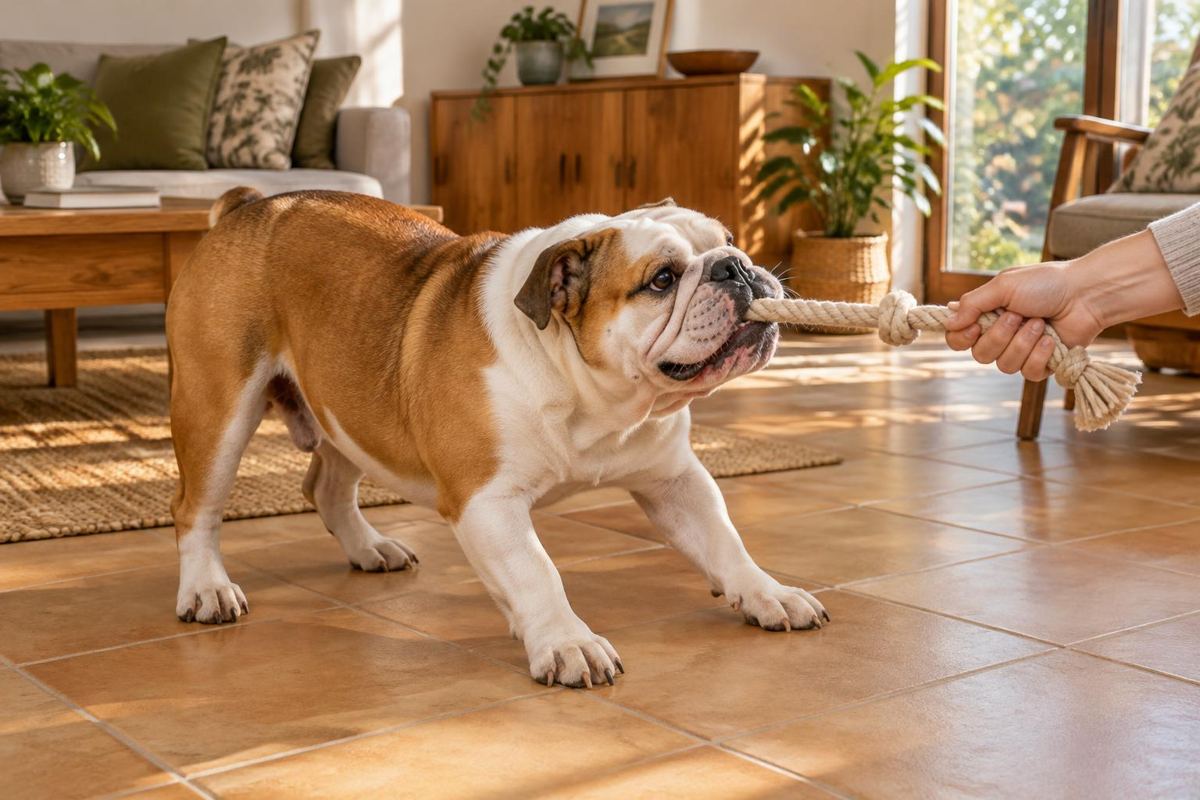
Give your bulldog several short play sessions a day instead of one long one, keep them to the cool parts of the day, and stop before your dog is puffing hard. Flat-faced dogs overheat more easily than other breeds, and most heatstroke in dogs is triggered by exercise rather than hot cars. Use balls too big to fit wholly in your dog's mouth, and roll or bounce toys along the ground instead of throwing them to be caught.
What it looks like
- Your bulldog races laps of the lounge room after dinner, skidding on the floorboards.
- They drop a toy on your foot, again and again, then nip at your sleeve when you ignore it.
- They pull hard for the first ten minutes of a walk, then flop down in the shade and refuse to move.
- After a game of fetch they are snorting, puffing and look like they need a lie-down, but five minutes later they want to go again.
- You want to tire them out, but you have heard bulldogs can overheat and you are not sure how much is too much.
Why it happens
Young dogs are built for bursts
Those sudden mad laps are called zoomies. Cornell University's vet school describes them as frenetic random activity periods, most common in puppies and young dogs, and often seen in the evening, after play, or when someone comes home. They are normal, but vets think they may be a way of releasing pent-up energy. Frequent zoomies at awkward times can be a sign your dog needs more physical exercise or mental stimulation.
Too little to do
VCA Animal Hospitals notes that boundless energy without an outlet can turn into destructive behaviour, and recommends regular, intentional exercise. A short daily session beats a long weekly one. If chewing and boredom are the bigger issue, see our Bored and chewing things page.
Short noses limit how hard they can go
Bulldogs, French bulldogs and pugs pant to cool down, and a short-nosed airway makes that less efficient. University of Queensland emergency vet Dr Mark Haworth explains that these breeds are more likely to have airway obstruction, which puts them at greater risk in heat. University of Cambridge researchers list exercise intolerance, heavy panting and overheating among the signs of breathing problems in flat-faced dogs. This is why your bulldog can be full of beans but run out of puff quickly.
Play itself is the main heat risk
A large UK study by Hall, Carter and O'Neill (2020) found exercise was the trigger in 74.2% of heat-related illness cases in dogs, far more than hot cars. Flat-faced dogs had higher odds of every type of heat illness. The Royal Veterinary College's VetCompass team found bulldogs had 14 times, and French bulldogs 6 times, the risk of heatstroke compared with Labradors. Dogs that were above average weight or over two years old were also at higher risk.
Balls and choking
PDSA lists balls among common choking hazards and advises choosing a ball large enough that your dog cannot fit the whole thing in their mouth. Catching toys mid-air raises the risk, which is why PDSA suggests letting toys land on the ground first. Cornell also warns that leaping and twisting for toys can build up into injury over time.
When to talk to your vet
Warning signs
- Heavy panting that does not settle after a few minutes of rest in the shade
- Noisy breathing, struggling to breathe, or gums or tongue that look blue, very red or pale
- Staggering, weakness, glazed eyes, confusion or collapse
- Vomiting or diarrhoea during or after play
- Not being able to manage a short run without stopping, or snoring and waking often at night
- Choking sounds, pawing at the mouth, or a toy or piece of toy that has gone missing
- Limping or pain during or after zoomies or fetch
If you see any of these, call your vet.
Heatstroke is an emergency. RSPCA Australia advises contacting your vet immediately if you suspect it.
The tools that help
Routine matters more than any toy. The biggest change most owners can make is moving play to early morning and evening, splitting it into short sessions, and watching your dog's breathing. On hot days, see our Too hot to walk page for indoor options. With that in place, here's what we use with our own dogs. You can see the full range on our Needs to burn energy page.
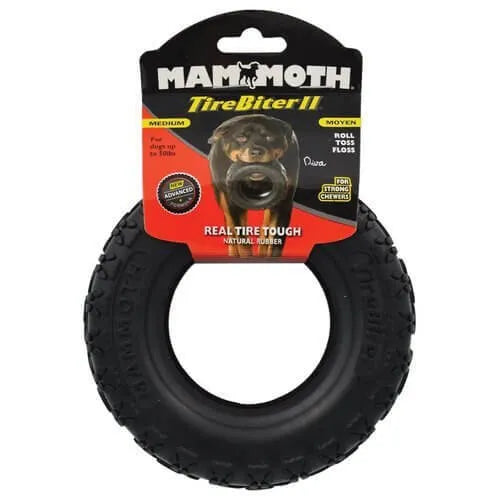
For tug: TireBiter Rubber Tyre Chew & Tug Toy
TireBiter Rubber Tyre Chew & Tug Toy, $39.95
Tug is a good fit for bulldogs because the game stays in one spot and you control how long and how hard it goes. The tyre's open centre gives you both a clear place to hold for short games.

For tug and short fetch: Flossy Chews Rope Tug Toy 3 Knot Large
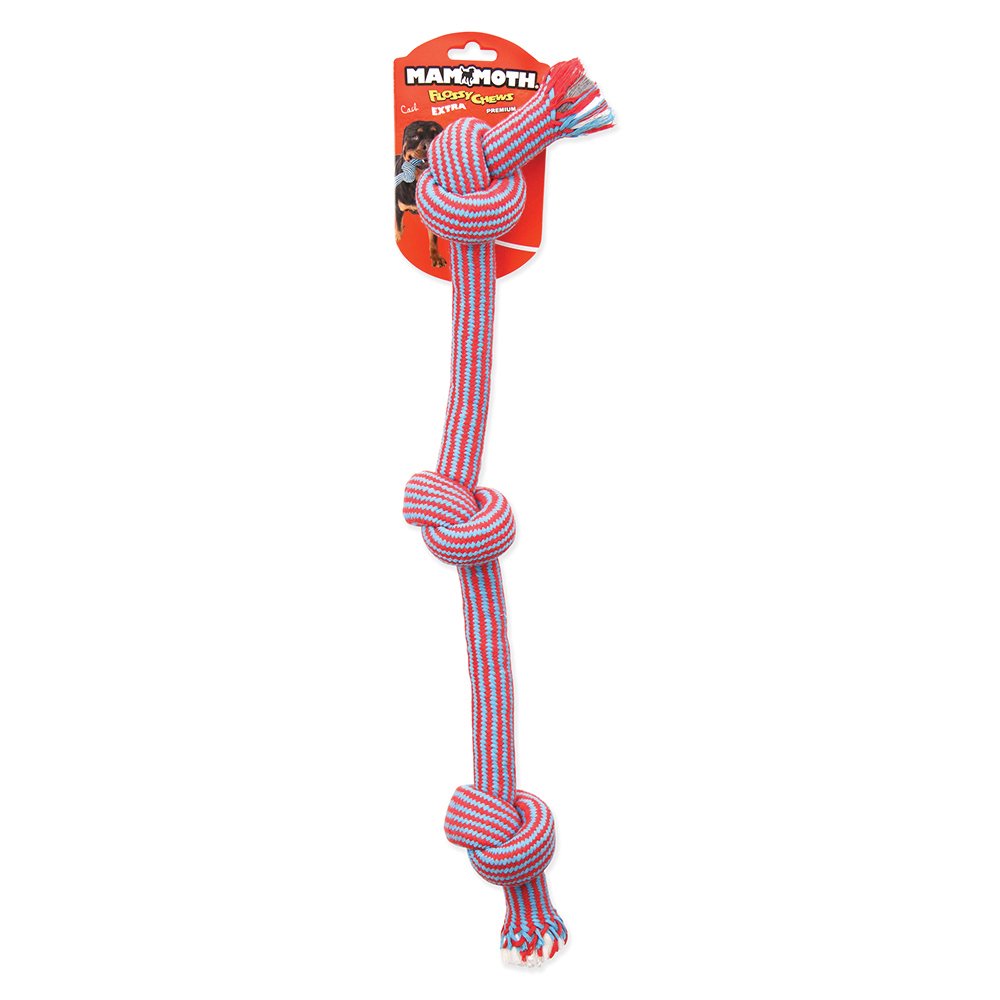
Flossy Chews Rope Tug Toy 3 Knot Large, $36.95
The three knots give you and your dog a clear place to hold, and the rope gives your dog something to grab. Texas A&M's vet school notes rope toys can shred and pieces can be swallowed, so we use this one only during play with us and put it away afterwards.
For outdoor chase: Chuckit! High-Visibility Fetch Kick Ball
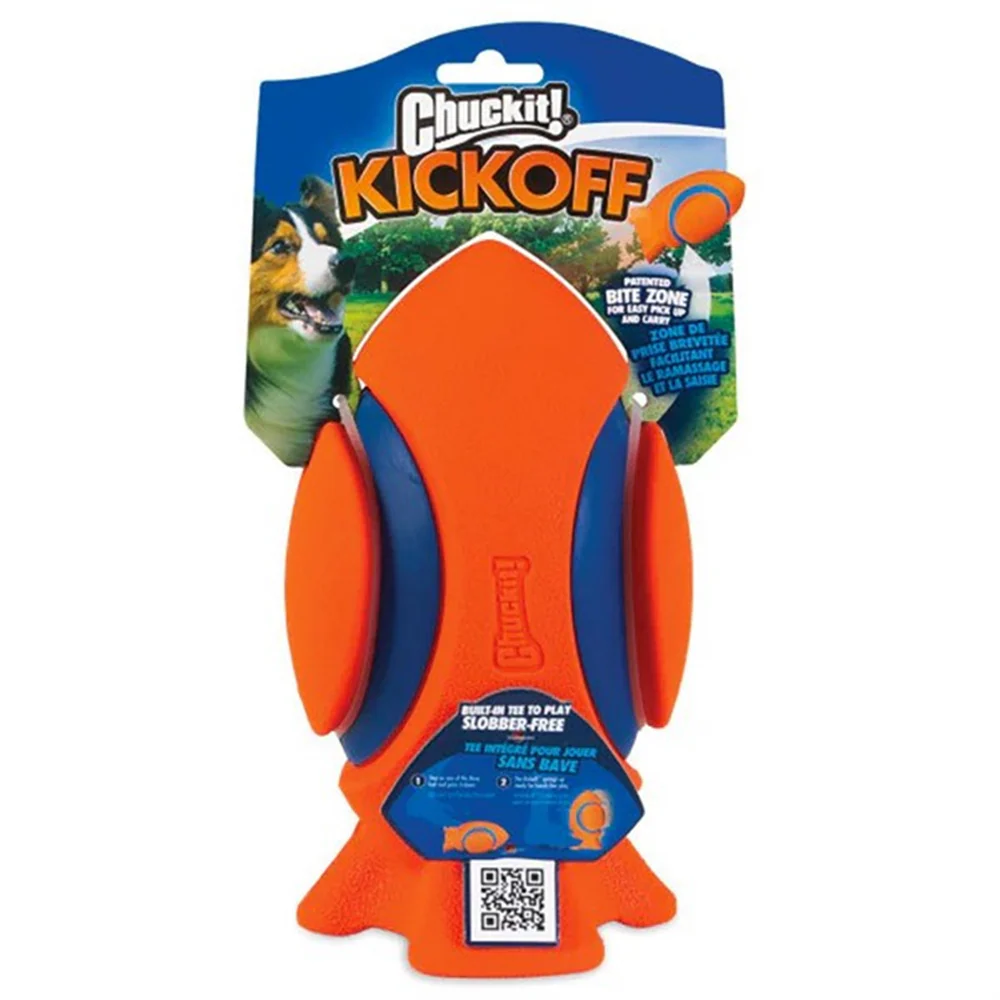
Chuckit! High-Visibility Fetch Kick Ball, $62.95
You kick this ball and your dog runs after it along the ground. That suits the PDSA advice to let toys land rather than be caught, and pushing a ball around is a game many bulldogs enjoy. As with any ball, check it is too big for your dog to fit wholly in their mouth before the first game.
For short indoor games: ZippyPaws Squeaky Plush Donut Dog Toy
ZippyPaws Squeaky Plush Donut Dog Toy, Strawberry, $26.95
On days when it is too warm to go out, we toss this squeaky donut down the hallway for a few minutes of chase on the carpet. Texas A&M advises that dogs who rip toys apart should not have plush or squeaky toys, because squeakers and stuffing can be swallowed. Keep it for supervised play, and put it away if the seams start to go.
Step by step
- Day 1: check with your vet. VCA advises talking to your vet before starting a regular exercise plan. Ask what a sensible amount of activity is for your dog's age, weight and breathing.
- Day 1: set the play times. Pick two or three short windows in the cooler parts of the day, such as early morning and after sunset. Avoid the middle of the day, as UQ's Dr Haworth advises.
- Day 1: make the space safe. Cornell recommends keeping zooming dogs away from stairs, slippery floors, obstacles and roads. Grass, carpet or packed dirt give better grip than tiles.
- Days 1–3: start with tug. Play for two or three minutes, then stop and let your dog rest in the shade with water. Watch the breathing. If your dog is still puffing hard after a few minutes of rest, that session was too long.
- Days 1–3: learn your dog's signal for enough. Cornell notes that a tongue curling at the edges or widening at the tip is a sign of tiredness. Stop before you see it, not after.
- Week 1: add ground-level fetch. Roll or kick a ball a short distance. Let it land or stop before your dog grabs it. No leaping catches.
- Week 1: mix in brain work. Cornell notes mental work can tire a dog as well as physical work. Ask for a sit or a drop between throws, or hide the toy behind a door for them to find.
- Week 2: build slowly. If breathing settles quickly after each session, add a minute or a few extra throws. VCA advises gradually increasing time and intensity. Keep each session short and add more sessions rather than longer ones.
- Every day: check the weather and the toys. On hot or humid days, RSPCA Australia advises against exercising pets at all. Switch to a few minutes of indoor play. Check toys for damage and keep only one or two out at a time.
Free plan
Free: The Burn-It-Off Plan. Printable, one page.
FAQ
How much exercise does a bulldog need?
There is no single figure, because it depends on age, weight and how well your dog breathes. Your vet can give you a target. Several short, gentle sessions in cool weather are safer for flat-faced dogs than one long one.
Is it normal for my bulldog to get the zoomies every night?
Yes, Cornell describes evening zoomies as normal, especially in young dogs. If they are very frequent, your dog may need more exercise or mental stimulation earlier in the day.
Can bulldogs play fetch?
Many enjoy it. Use a ball too big to fit wholly in their mouth, keep throws short and low, and let the ball land before they pick it up. Stop well before they are puffing hard.
Are tennis balls safe for bulldogs?
PDSA says standard tennis balls are not always ideal, as the fuzzy coating can wear tooth enamel and a slippery or damaged ball may increase choking risk. A ball sized for your dog, made from durable rubber, is a better choice.
Is tug of war OK for a bulldog?
Tug keeps the game in one spot and lets you control the pace, which suits short-nosed dogs. Keep sessions short, take breaks, and stop if your dog's breathing becomes noisy or laboured.
What temperature is too hot to play with my bulldog?
Sources do not give a single safe number. RSPCA Australia advises not exercising pets in hot, humid conditions, so on warm or muggy days stick to short indoor play in a cool room.
My bulldog wants to keep going but is panting heavily. Should I stop?
Yes. Flat-faced dogs often want to play beyond what their breathing can handle. If heavy panting does not settle with rest in the shade, call your vet.
Related guides
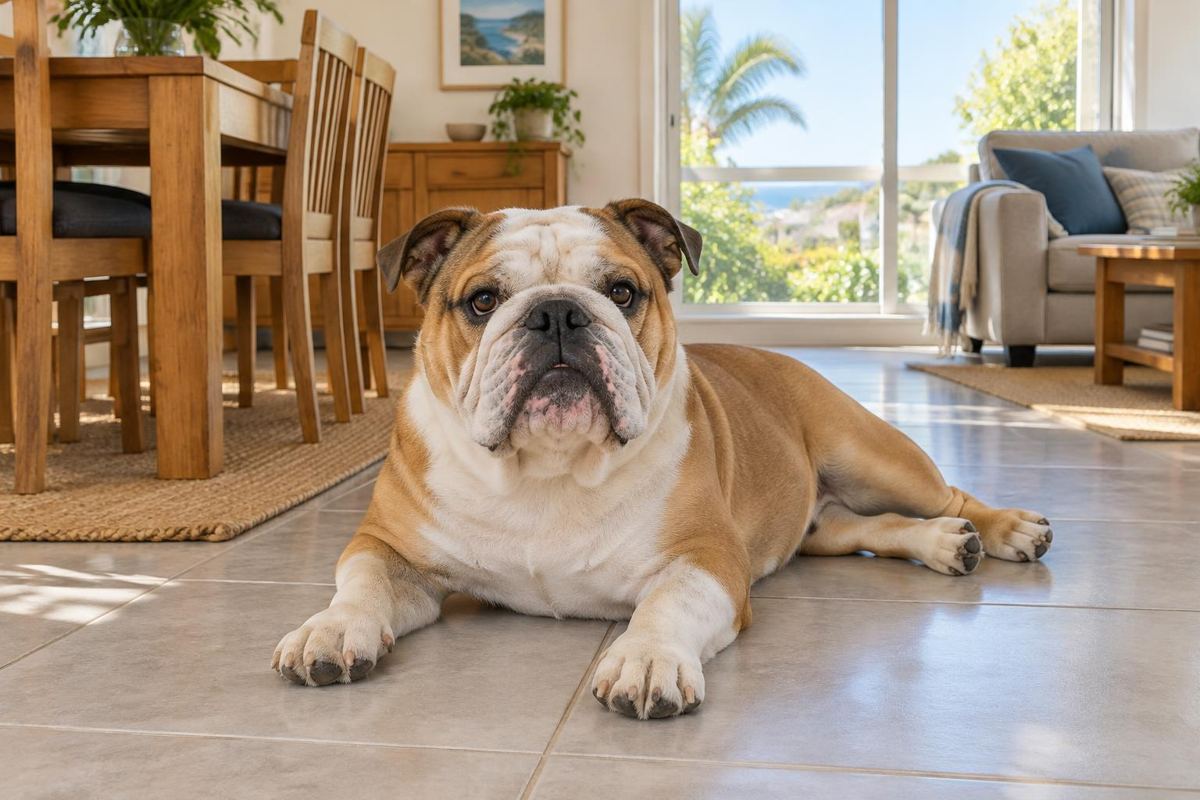
Too hot to walk
Is it too hot to walk my bulldog? (And how to keep them busy indoors)
If it's hot or humid, or the footpath is too hot for the back of your hand for five seconds, it's too hot to walk a bulldog.
Read the guide →
Bored and chewing things
Why does my bulldog chew everything? (And what actually helps)
Chewing is normal dog behaviour, and most bulldogs who wreck shoes and furniture are chewing because they are bored, under-stimulated, teething or stressed, not because they are naughty.
Read the guide →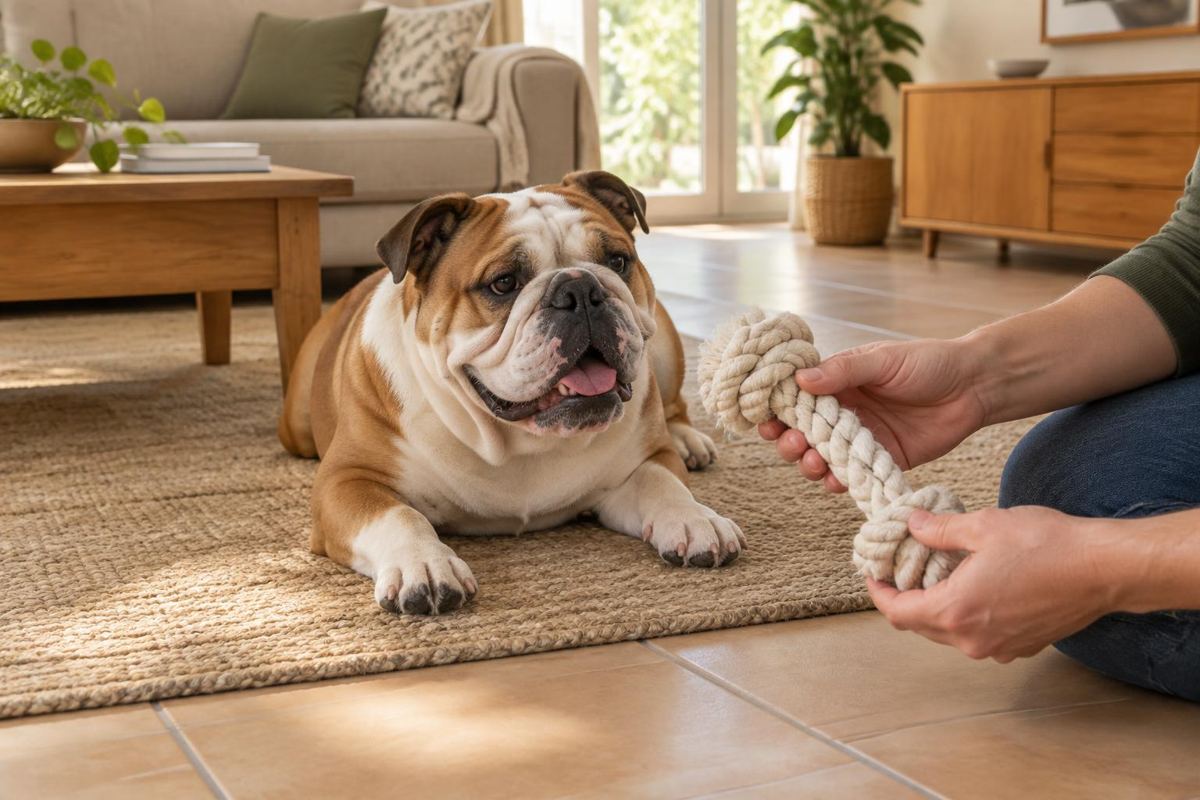
Needs to burn energy
How to choose toys and balls for bulldogs
Choose toys by mouth size and play style, check them for damage and plan short indoor games for hot days. Practical guidance from bulldog owners.
Read the guide →Sources (11)
- Hall, Carter and O'Neill (2020), Dogs Don't Die Just in Hot Cars: Exertional Heat-Related Illness (Heatstroke) Is a Greater Threat to UK Dogs, *Animals*
- Royal Veterinary College VetCompass, flat-faced dogs such as bulldogs, French bulldogs and pugs at increased risk of heat stroke
- RSPCA Australia, Warm weather worries: protect pets from heatstroke
- RSPCA Australia, Record-breaking temperatures a particular danger for flat-faced pugs and bulldogs
- The University of Queensland, Protect your pets from the heat
- Cornell University College of Veterinary Medicine, What are zoomies?
- Cornell University College of Veterinary Medicine, Playing ball safely
- PDSA, How to choose a safe ball for your dog
- PDSA, First aid for choking
- Texas A&M College of Veterinary Medicine, Hidden hazards: a guide to the potential dangers of pet toys
- VCA Animal Hospitals, How to deal with a high-energy puppy