Quick answer
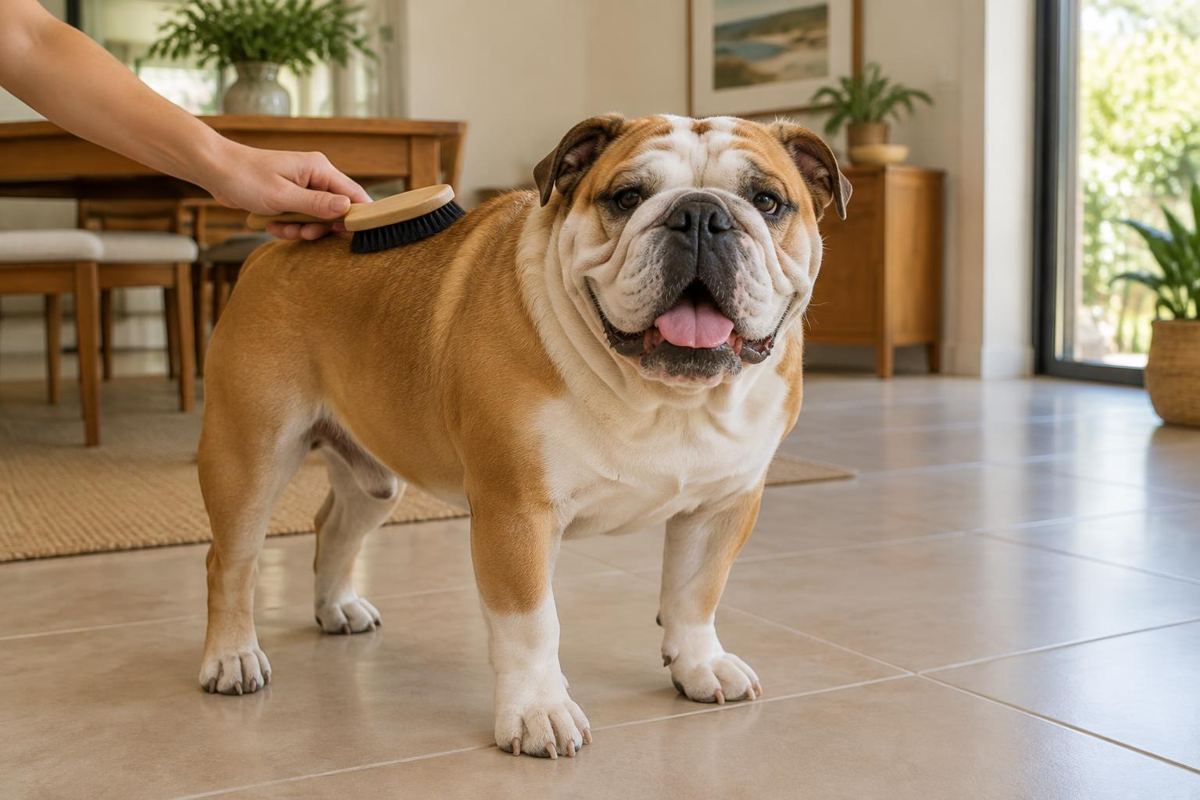
A bulldog's short coat needs a quick brush or comb a few times a week, more often when shedding picks up in spring and autumn. Bath only when needed, and keep the skin folds clean and fully dry, because warm, damp folds are where trouble starts. Redness, smell or constant itching is a job for your vet, not the brush.
What it looks like
Sound familiar?
- Short white or fawn hairs woven into the couch, the car seat and your black work pants.
- A sudden burst of loose hair every spring.
- A slightly greasy or doggy feel when you run your hand along their back.
- Grime building up in the nose wrinkle or around the tail.
- A dog who wriggles off the moment the brush comes out.
None of this means you're doing anything wrong. Short coats are low maintenance, not no maintenance.
Why it happens
Short coats still shed all year
Shedding is a normal part of the hair growth cycle and happens year-round. How much a dog sheds depends mostly on genetics, and short single hairs work their way into fabric more easily than long ones. A few minutes of regular brushing catches loose hair before it lands on your furniture.
Seasons change the coat
Many dogs shed more in spring and autumn as the coat adjusts to warmer and cooler weather. Shedding responds to daylight and temperature, so dogs that live mostly indoors under lights and air conditioning can shed more evenly, or on a different timetable, than outdoor dogs.
Wrinkles trap moisture and grime
Flat-faced and short-nosed dogs, including British and French bulldogs, have skin folds, most often over the nose, around the tail and near the vulva. Those pockets are warm and can stay damp, which suits the yeast and bacteria that normally live on skin. A large UK study of vet records found English bulldogs were far more likely than other dogs to be diagnosed with skin fold dermatitis, and French bulldogs are also predisposed. That's why the folds get their own step in the weekly routine.
Too much bathing, or the wrong shampoo
Frequent bathing can dry out skin, so bath only when needed. Harsh human shampoo is listed among the everyday causes of extra shedding. Leftover shampoo under the folds can also irritate, so rinse well and dry carefully.
The dog isn't used to being handled
The RSPCA says the most important step in grooming is making sure your dog is comfortable being touched. A dog who has never had their paws, tail and face handled calmly will find every brush and wipe a battle.
When to talk to your vet
Brushing and wiping are routine care. These signs are not:
- Red, sore or weepy skin in the folds or anywhere on the body
- A bad smell from the folds, ears or coat (often the first thing owners notice)
- Constant scratching, rubbing, licking or chewing at the skin
- Yellow or white discharge inside a fold, or your dog flinching when a fold is touched
- Bald patches, thinning hair or crusty, flaky skin
- A sudden big jump in shedding outside the usual spring and autumn change
- Fleas, ticks or flea dirt that you find while brushing
- A dull, dry or brittle coat alongside changes in thirst, weight or mood
If you see any of these, call your vet.
The tools that help
The routine matters more than the products. A calm dog, a few minutes a few times a week, and a soft cloth for the folds will do most of the work. For short-haired dogs, the RSPCA notes a bristle brush is usually enough, and a rubber brush can suit dogs who dislike brushes or combs. We use a comb alongside that. Here's what we use with our own dogs. You can see everything for this problem on our coat care page.
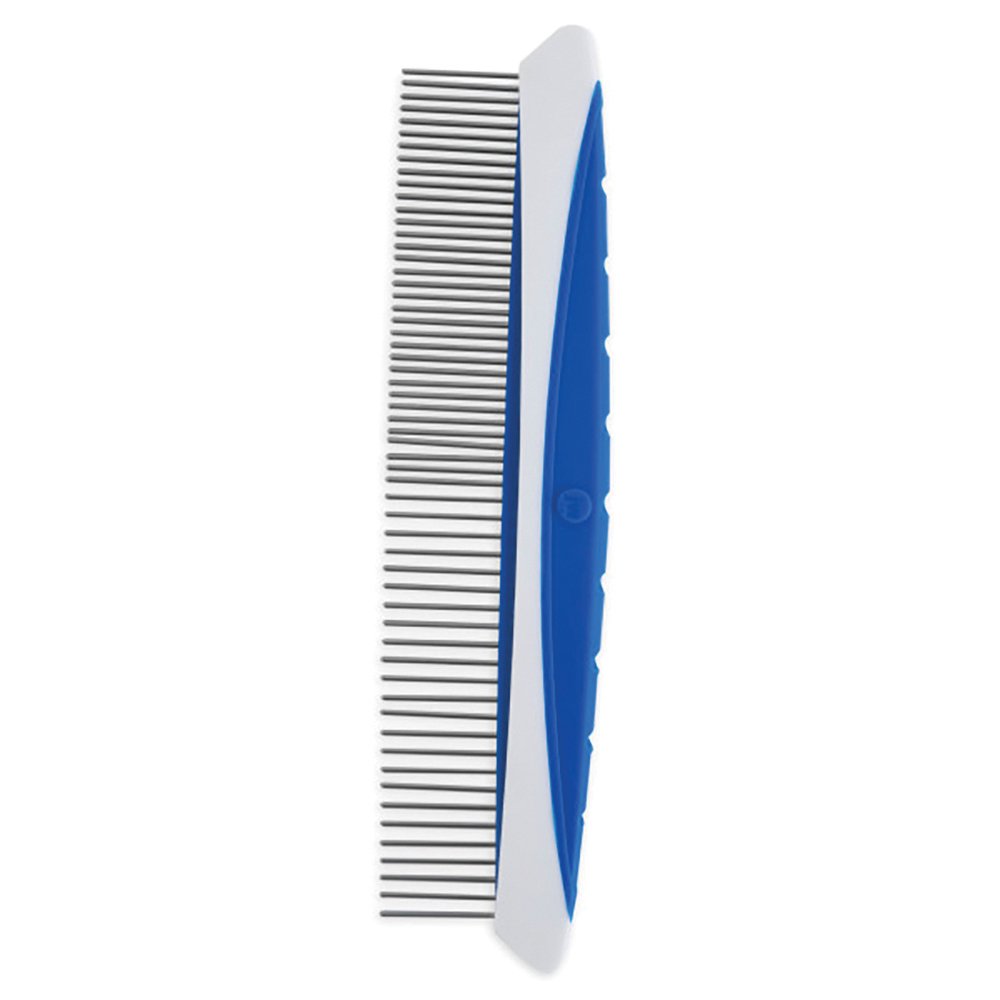
JW GripSoft Rotating Comfort Comb Fine & Coarse 20cm
JW GripSoft Rotating Comb 20cm, $22.95
This comb has two tooth spacings on one bar. The coarser side runs through the thicker hair on the neck and rump, and the finer side picks up short loose hairs and lets you look closely at the skin as you go. Brushing against the fur is how the RSPCA suggests checking for fleas or ticks, and a fine comb makes that check easy.
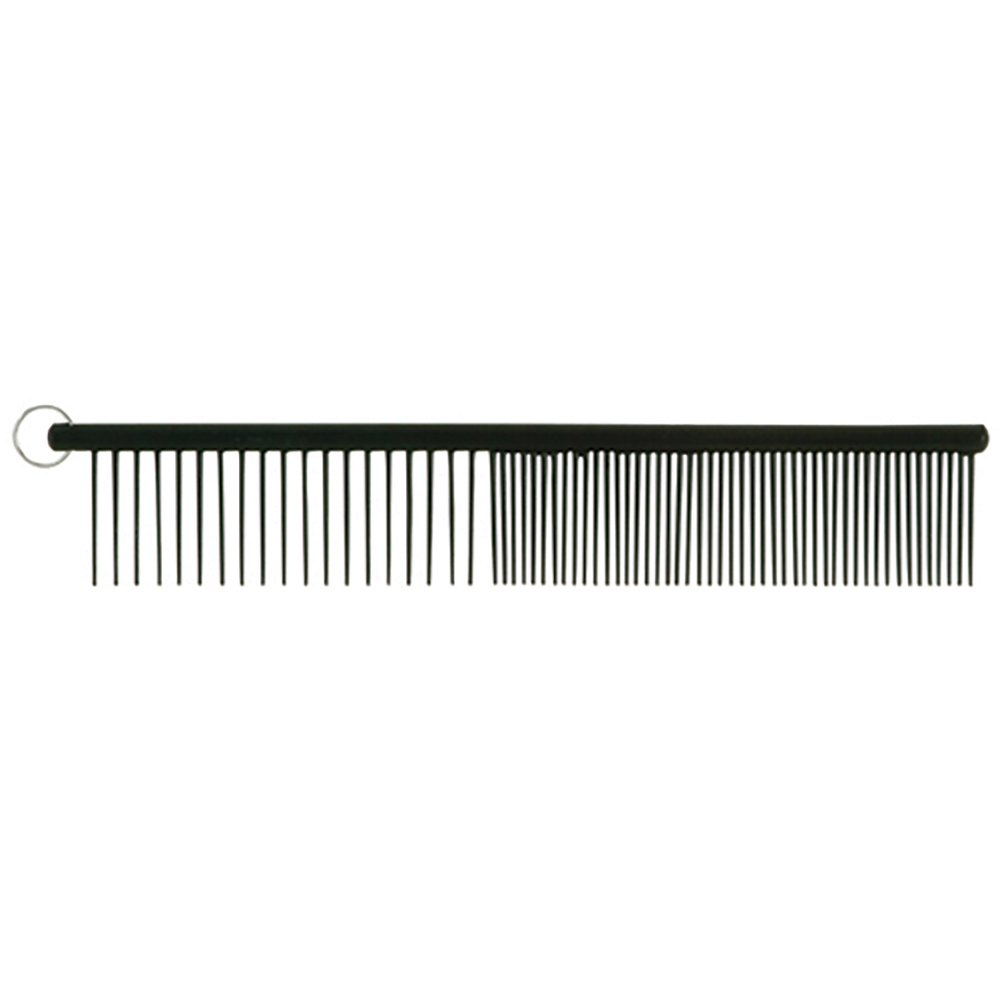
Millers Forge Vista Round Back Groomers Comb 17.7cm
Millers Forge round-back comb 17.7 cm, $46.95
A compact comb with a rounded back. Because it's small, it gets into the awkward spots on a bulldog: behind the ears, around the neck and along the chest between the front legs. We keep one by the back door for a quick tidy after the morning walk, which is often all a short coat needs.
There's no coat care bundle, and you don't need one. One comb plus a soft cloth and towel covers it.
Step by step: a simple weekly coat routine
- Day 1: handling only. Before any tools, spend two or three minutes touching your dog's back, paws, ears, tail and face, rewarding calm behaviour with a treat. Stop while they're still relaxed. Repeat for a few days if your dog is unsure.
- Day 3: introduce the comb. Let your dog sniff it, give a treat, then do three or four slow strokes along the back with the coarse side, following the direction of the hair. Treat and finish.
- Week 1: short sessions, three times. Comb with the hair over the back, sides and chest for about five minutes. Then do one pass against the hair on the back and check the skin and comb for fleas or flea dirt.
- Every session: wipe the folds. Lift each fold. Deep folds that collect food may need a daily wipe.
- Every session: dry every fold. Pat each fold completely dry with a separate clean cloth or cotton pad. This step matters as much as the cleaning.
- Week 2: settle the routine. Aim for three short comb sessions a week, for example Monday, Wednesday and Saturday, plus the fold wipe. Use the small comb for the neck, ears and chest.
- Spring and autumn: step it up. When shedding increases, comb daily or every second day until it settles.
- Bath only when needed. Use a dog shampoo, rinse twice so nothing is left under the folds, then towel and dry the creases thoroughly. Comb once the coat is fully dry, as plenty of loose hair comes away after a bath.
- Make it a habit. Pair coat time with something your dog already enjoys, such as just after a walk. On hot Queensland days, do it in the cool of the morning or evening, the same timing that suits walks.
Free plan
Free: Weekly coat routine. Printable, one page.
FAQ
Do bulldogs shed a lot?
They shed year-round, with heavier spells in spring and autumn. Short hairs are very noticeable on furniture and clothes, but regular brushing catches a lot of them first.
How often should I brush my French or British bulldog?
A few short sessions a week suits most short coats, increasing to daily during heavy shedding.
Why is my bulldog suddenly shedding so much?
Often it's the seasonal coat change. Shedding outside the usual seasons, or with bald patches, itching or flaky skin, is worth a vet visit.
How often should I clean my bulldog's wrinkles?
Regularly, and daily for deep folds or folds that collect food. Clean gently, then dry each fold completely.
What should I use to clean the folds?
PDSA suggests cotton wool with salt water and says not to use anything else unless your vet advises it. If you're unsure, ask your vet what suits your dog.
How often should I bath my bulldog?
Only when needed, as frequent bathing can dry the skin. Use a dog shampoo rather than a human one.
My puppy hates the brush. What do I do?
Go back to handling with treats, keep sessions very short and stop before they get wriggly. Our new puppy page covers the early weeks.
Related guides
New puppy
Bringing home a bulldog puppy: what do I do on the first night and first week?
Set up a small, safe sleeping area close to you, expect crying and night-time toilet trips for the first few nights, and keep the first week quiet and predictable.
Read the guide →
Won't settle
Why won't my bulldog settle at night? (And what actually helps)
Most bulldogs that won't settle in the evening haven't had enough to do during the day, are too warm, or don't yet have a predictable bedtime routine and a bed they're used to.
Read the guide →
New puppy
Bulldog puppy checklist: feeding, toys and car travel
A practical bulldog puppy checklist: choose accessible feeding products, car harnesses sized by chest, comfort items and supervised enrichment for flat-faced dogs.
Read the guide →Sources (8)
- PDSA, Skin fold dermatitis in dogs
- American Animal Hospital Association (AAHA), Pets and shedding
- RSPCA Queensland, Quick tips: grooming your cat or dog
- PetMD (reviewed by Barri J. Morrison, DVM), Why is my dog shedding so much?
- PetMD, How to care for your wrinkly dog
- Animal Surgical Center, Caring for dogs with wrinkles
- Royal Veterinary College VetCompass, English bulldogs twice as likely to have a health problem (O'Neill et al., Canine Medicine and Genetics, 2022)
- Royal Veterinary College VetCompass, French Bulldogs: latest VetCompass breed explored