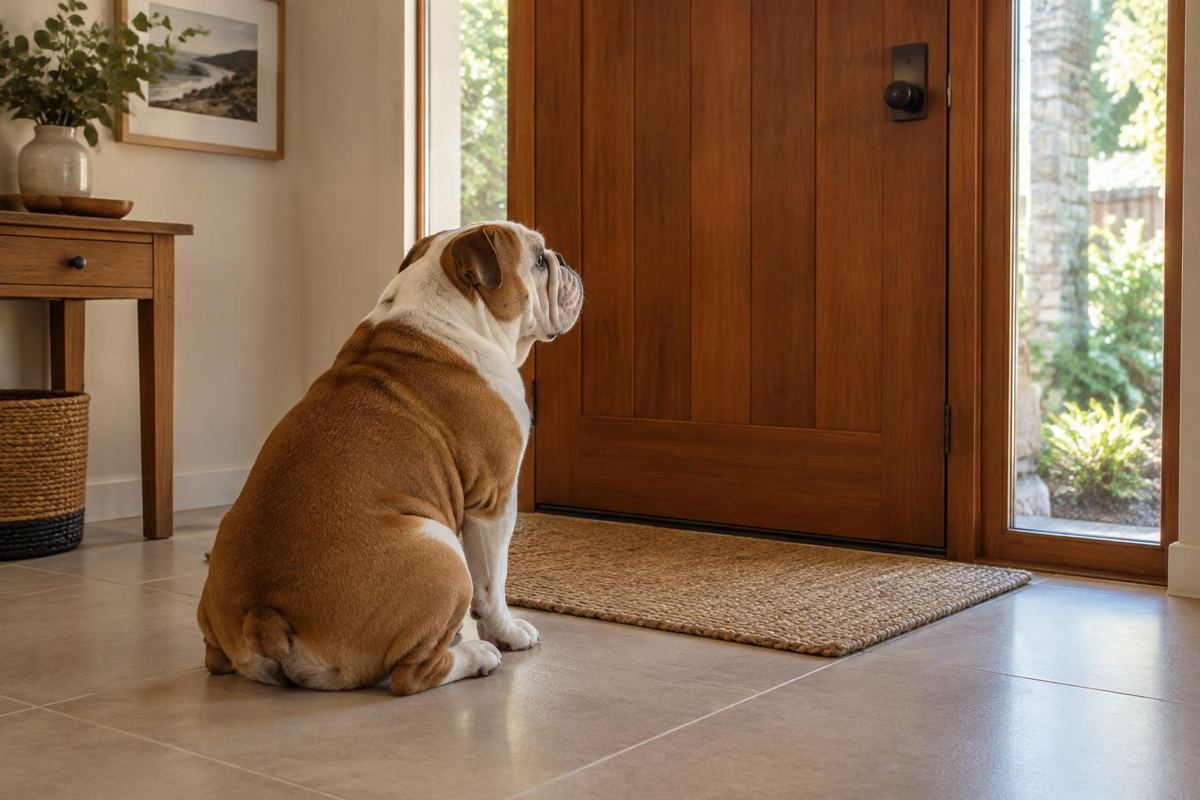
Why does my bulldog struggle when left home alone? (And what actually helps)
Howling, chewing the door, mess when you get home? Why it happens, when to see the vet, and how to make time alone easier.
By the Bulldoggy Co team · Updated 10 Oct 2026
Quick answer
Most bulldogs who struggle home alone never learned that time alone is safe, have had a change in routine, or have nothing to do while you're out. Barking, chewing near doors, accidents and pacing while you're out can come from boredom, from not knowing how to settle alone, or from real distress, which is a matter for your vet or a qualified behaviourist. Start with four things: a walk and toilet stop before you leave, a long-lasting food toy, short practice absences, and a camera to see what really happens.
What it looks like
Sound familiar?
Neighbours mention barking or howling for much of the day.
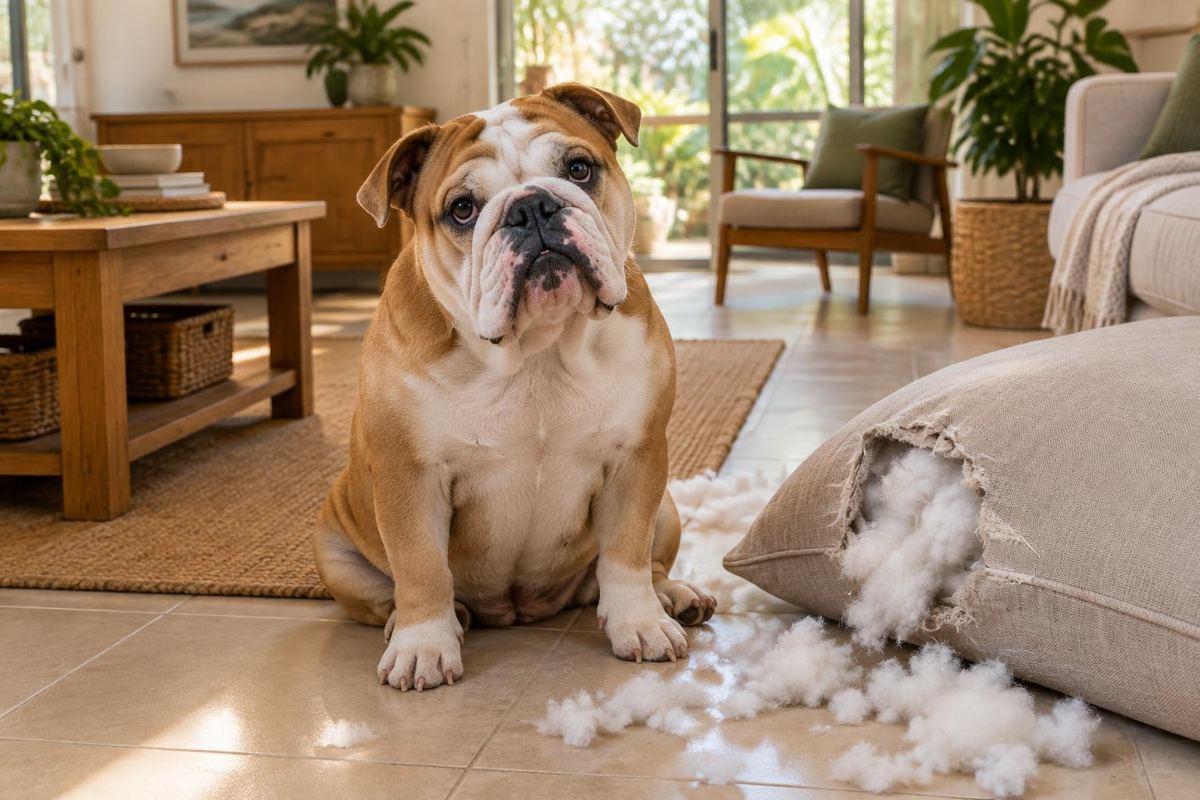
Chewed door frames or blinds near the back door.
A puddle inside from a dog who is otherwise toilet trained.
Your dog following you around as soon as you pick up your keys.
A treat toy left behind that is still full when you get back.
A huge, over-the-top greeting when you walk in, even after a short absence.
Some dogs show nothing obvious at all. They lie still but tense, or pant and pace, and you only find out when you film them.
Why it happens
They never learned that being alone is fine
The University of Bristol's behaviour clinic says one of the most common causes in adult dogs is that they never learned, as puppies, that being alone is safe. The distress a puppy shows when left simply carries on into adulthood.
A change in routine
RSPCA Australia notes that changed routines can be stressful, and that many dogs struggle the first time they spend a full day alone. Going back to the office after working from home, a new job or new hours can all set it off.
Not enough to do
The Australian Veterinary Association (AVA) says dogs can become lonely and bored when left alone for long periods. A dog with nothing to do may chew or dig. RSPCA Queensland points out that boredom can look very similar to separation distress, which is one reason a vet should help work out which it is.
Fear of something that happened while alone
The Bristol clinic notes that a dog can link being alone with a frightening event, such as a loud noise. Storms, fireworks or building work next door can all play a part.
Health problems
RSPCA UK says underlying health issues can cause or worsen separation-related behaviour. A dog that suddenly starts having accidents or acting differently may have a medical reason, which is why the vet comes first.
Being told off on your return
Scolding a dog for a mess they made hours earlier doesn't teach them anything. The Bristol clinic says it can make them more worried about being alone and about you coming home. The Ohio State University vet centre is clear that these behaviours are not spiteful.
When to talk to your vet
Real separation-related distress is a behaviour problem that needs a vet, who may refer you to a qualified veterinary behaviourist. Toys and routines are not a treatment for it. Watch for:
Toileting inside when your dog is usually reliable, or any sudden change in behaviour
Chewing or scratching at doors, windows or exits, or trying to escape
Hurting themselves, such as constant paw licking, tail biting or broken nails from scratching
Trembling, heavy drooling, or panting when they aren't hot
Vomiting, or refusing food and treat toys whenever you're out
Barking, howling or pacing for long stretches after you leave
Signs of distress that start before you've even left the house
If you see any of these, call your vet.
The tools that help
Routine matters more than any product, and for a bulldog that includes a cool, shaded room while you're out. Exercise, a toilet stop, short absences built up slowly, and someone to break up a long day will do more than anything we sell. What these products can do is give your dog something to work on and a familiar place to rest. Here's what we use with our own dogs.
You'll find everything for this problem on our Home alone page.
One safety point first. The AVA says toys left with an unsupervised dog must be safe and nothing should be left out that could become a choking hazard. Try any new toy while you're home and watching before you leave your dog alone with it.
A soft thing for their resting spot
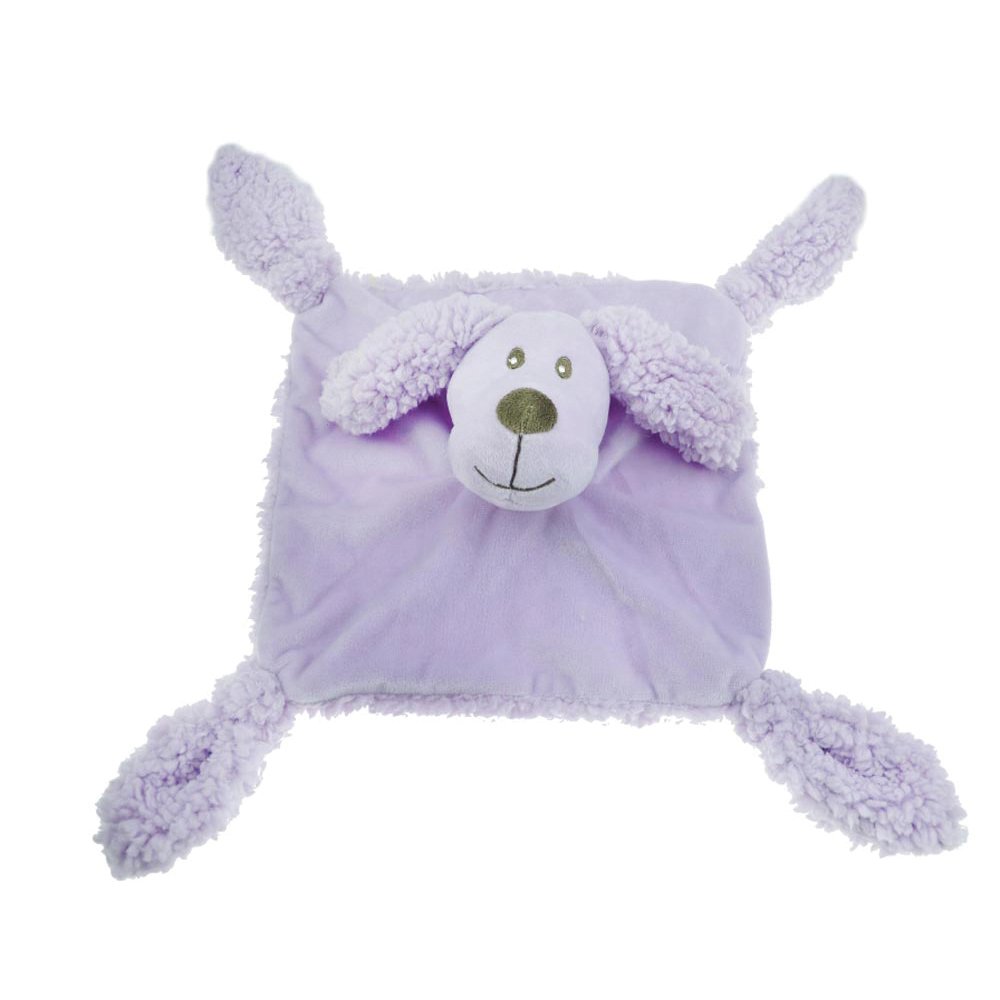
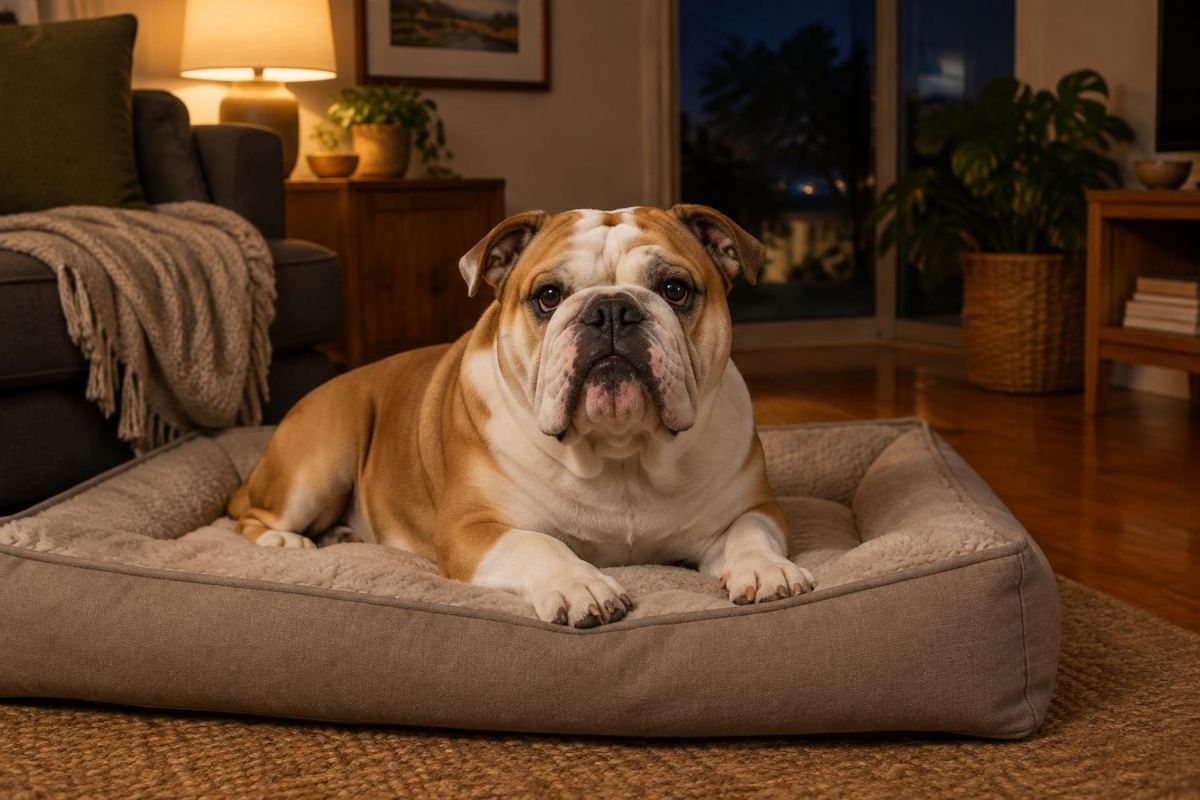
The Aroma Dog Fleece Security Blanket 30cm ($23.95) is a small fleece blanket that goes in your dog's usual bed or resting place. The RSPCA's training plan for being left alone starts with your dog settling in their bed, so a soft, familiar item there makes the bed an obvious place to go. It's a blanket, not a chew toy, so take it away if your dog starts tearing at it.
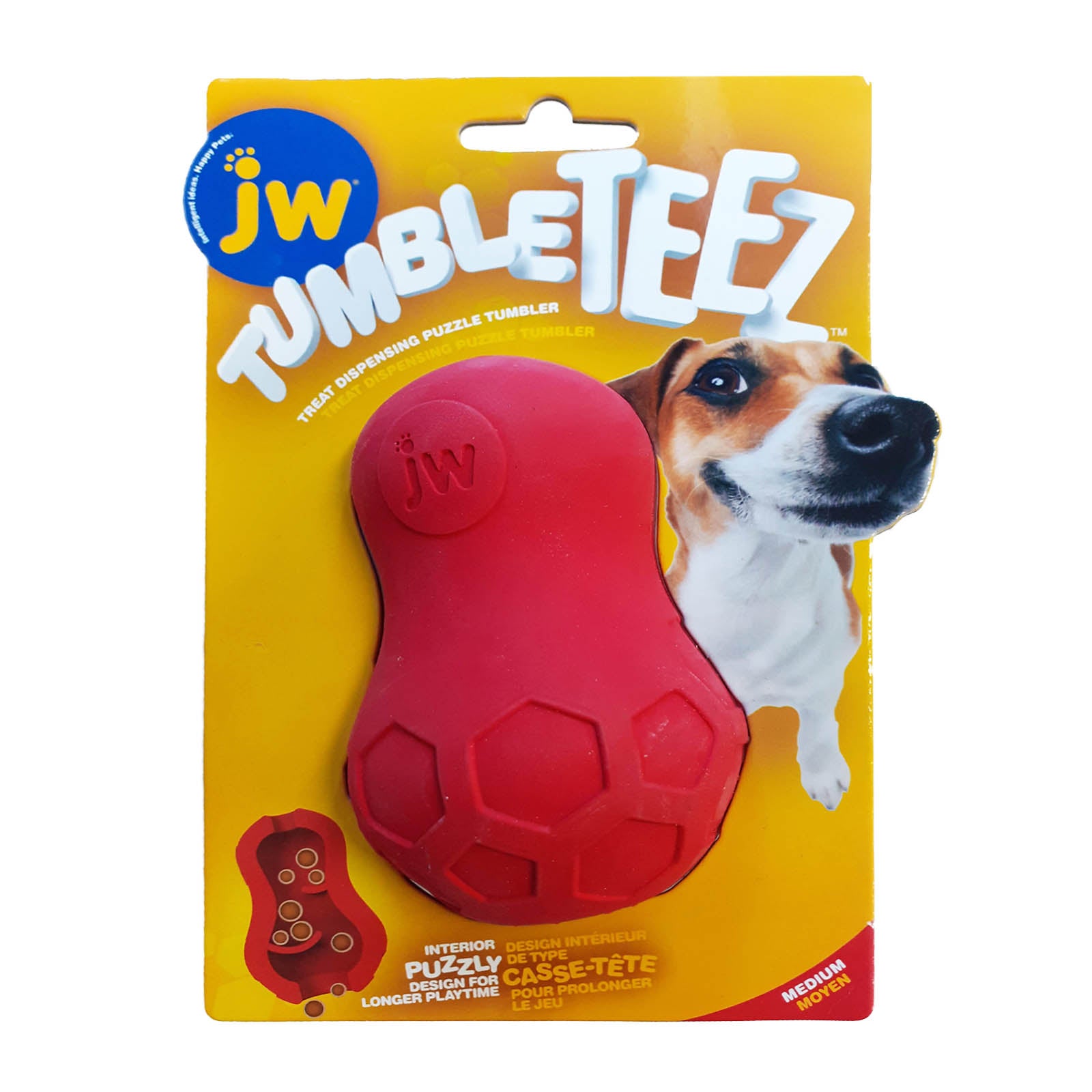
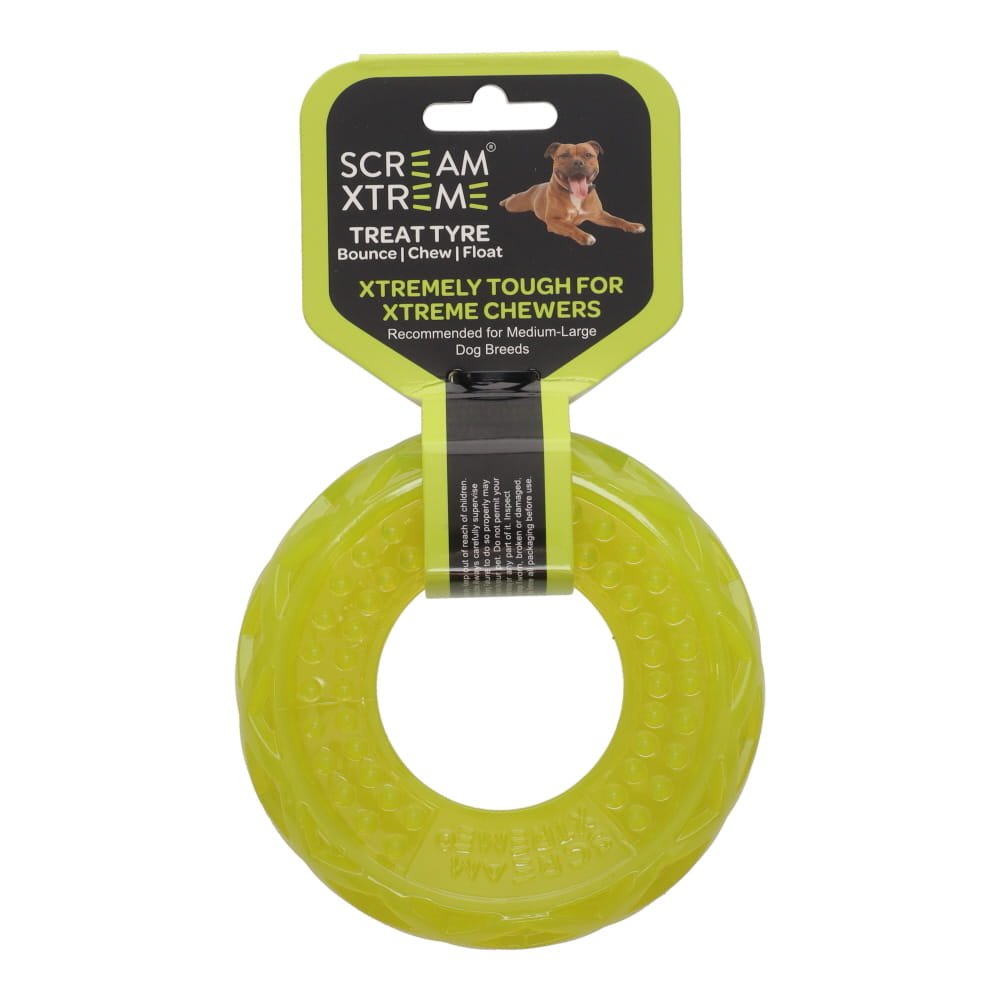
Both RSPCA Australia and RSPCA UK suggest a long-lasting food toy when you go out, and the AVA suggests serving most of a dog's food in puzzle feeders. The JW Treat Puzzle Tumbler ($29.95) has an internal maze, so your dog has to nudge and roll it to work the treats out. The Scream Treat Dispensing Tyre Chew Toy, Green ($45.95) can be packed with food, and your dog chews and plays with it to get it out. If your dog leaves these untouched while you're out, note it: the RSPCA lists refusing food toys when alone as a sign of distress.
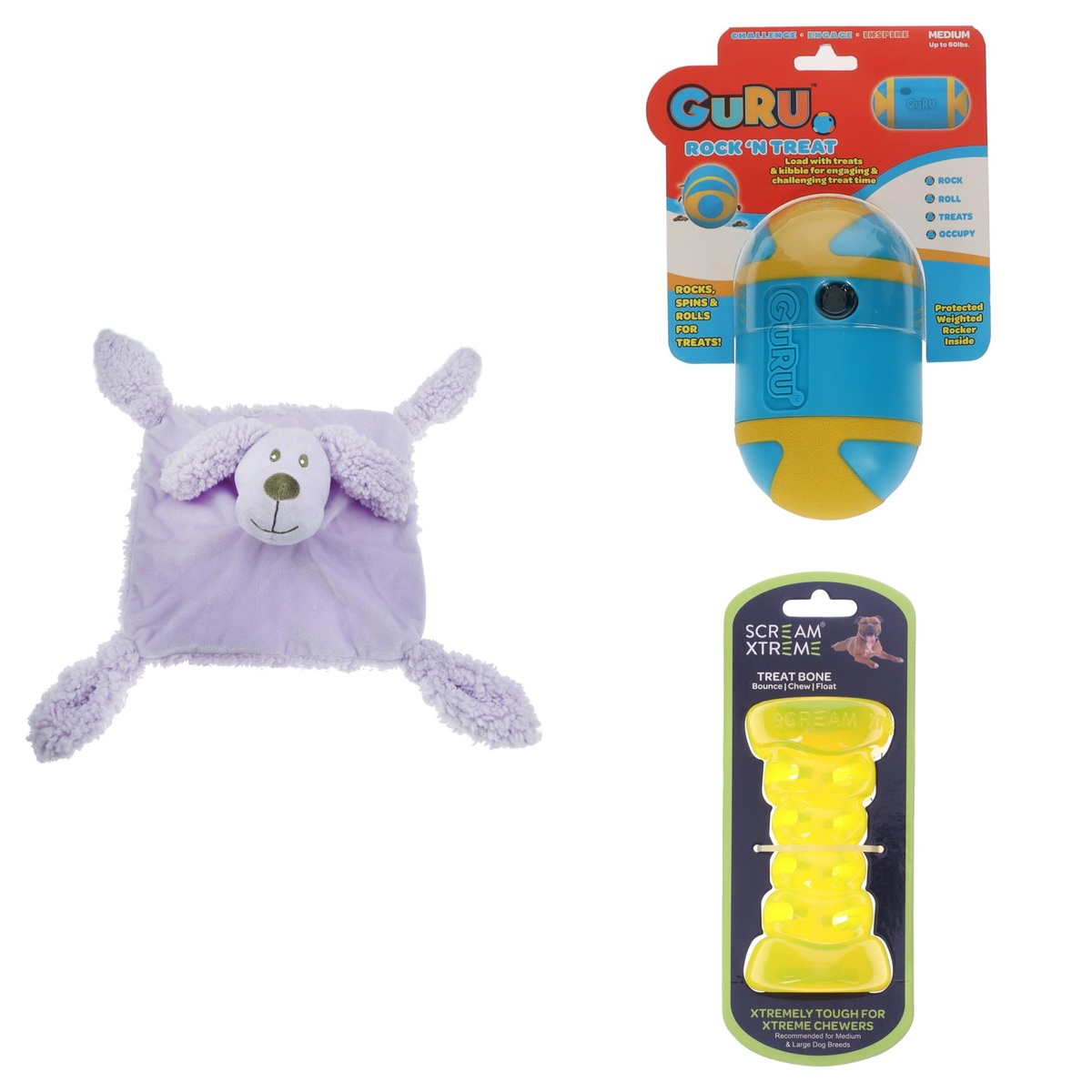
The Home Alone Bundle ($117.95) puts the blanket together with a puzzle and a chew in one order. The blanket goes in their resting spot, and the puzzle and chew give them something to work on.
If chewing and boredom are the bigger issue, our Bored and chewing things page has more treat toys and chews. If your dog has more energy than their morning walk uses up, see Needs to burn energy.
Step by step
Day 1: Film a normal departure. Point a phone or camera at your dog's bed or the door you leave by. Watch the first 30 minutes. RSPCA UK says problems usually start within a few minutes to half an hour of you leaving. Show your vet what you see.
Day 1: Set up the resting spot. Choose a quiet room or corner away from the front door. Put their bed and the blanket there. RSPCA UK suggests closing curtains or playing the radio to cut down outside noise, and the AVA suggests a quiet TV or radio in the background. On hot days, make sure the room stays cool with shade and fresh water, because the RSPCA warns that flat-faced dogs are especially prone to heat stress.
Days 2–4: Teach the bed. While you're home, ask your dog to go to their bed and reward them for staying there quietly. Then step away a few metres, come back and reward.
Days 2–4: Make the food toy special. Fill the treat toy and give it only when you're about to leave, or when you're in another room. Put it away when you're back so it stays interesting.
Week 1: Practise the cues without leaving. Pick up your keys, put on your shoes or grab your bag, then sit back down. RSPCA Australia says this helps those cues stop predicting a departure.
Week 1: Short real absences. Walk out the door and straight back in. Then shut the door for a minute. Then a few minutes. Ohio State suggests short daily absences, like a quick trip to the shops, building up in small steps of 5 to 15 minutes.
Every workday: Walk, toilet, then leave. Exercise your dog and let them toilet before you go, and don't leave them hungry. Keep the goodbye low-key. Ohio State notes that talking to the dog as you leave has been seen to increase distress.
Every workday: Come home quietly. RSPCA Australia suggests greeting your dog softly and giving attention once they've settled. Never tell them off for anything that happened while you were out.
Break up long days. RSPCA UK recommends not leaving a dog alone for more than four hours. A midday dog walker, a friend or relative popping in, or a day or two a week at a reputable doggy daycare all help.
To progress, or to step back. Once your dog is happy for up to an hour, longer stretches usually get easier. If the footage shows barking, pacing or trembling, go back a stage. If nothing improves, go back to your vet.
Free plan
Free: Home-alone practice plan. Printable, one page.
FAQ
How long can I leave my bulldog alone?
RSPCA UK recommends no more than four hours for an adult dog, and much less for puppies. For a full workday, plan a midday visit, a dog walker or daycare.
Is my bulldog chewing things to get back at me?
No. Ohio State University's vet centre says separation behaviours are not retaliatory or spiteful. The Bristol clinic notes that dogs don't know these behaviours are wrong.
Should I tell my dog off when I find a mess?
No. Punishing a dog after the fact doesn't reduce the problem and often makes them more worried about being left and about you coming home.
Why doesn't my dog touch the treat toy while I'm out?
It may not be interesting enough, or it may be a sign of distress. RSPCA UK lists refusing food or food toys when alone as one of the signs, so film a departure and talk to your vet.
Should I leave the TV or radio on?
The AVA says a quiet TV or radio in the background might be worth trying if your dog barks when alone. RSPCA UK also suggests it to cover outside noise.
Should I make a fuss saying goodbye?
Keep goodbyes short and low-key. Ohio State says talking to your dog as you leave has been seen to increase distress, and RSPCA Australia suggests not responding to attention-seeking in the lead-up to leaving.
Is it just boredom or is it separation anxiety?
They can look the same, which is why RSPCA Queensland says your vet should be the one to tell them apart. Video of your dog while you're out is the most useful thing to bring.
Most bulldogs that won't settle in the evening haven't had enough to do during the day, are too warm, or don't yet have a predictable bedtime routine and a bed they're used to.
Chewing is normal dog behaviour, and most bulldogs who wreck shoes and furniture are chewing because they are bored, under-stimulated, teething or stressed, not because they are naughty.