If you're worried about your dog's health, talk to your vet.
What are you looking for in a slow feeder?
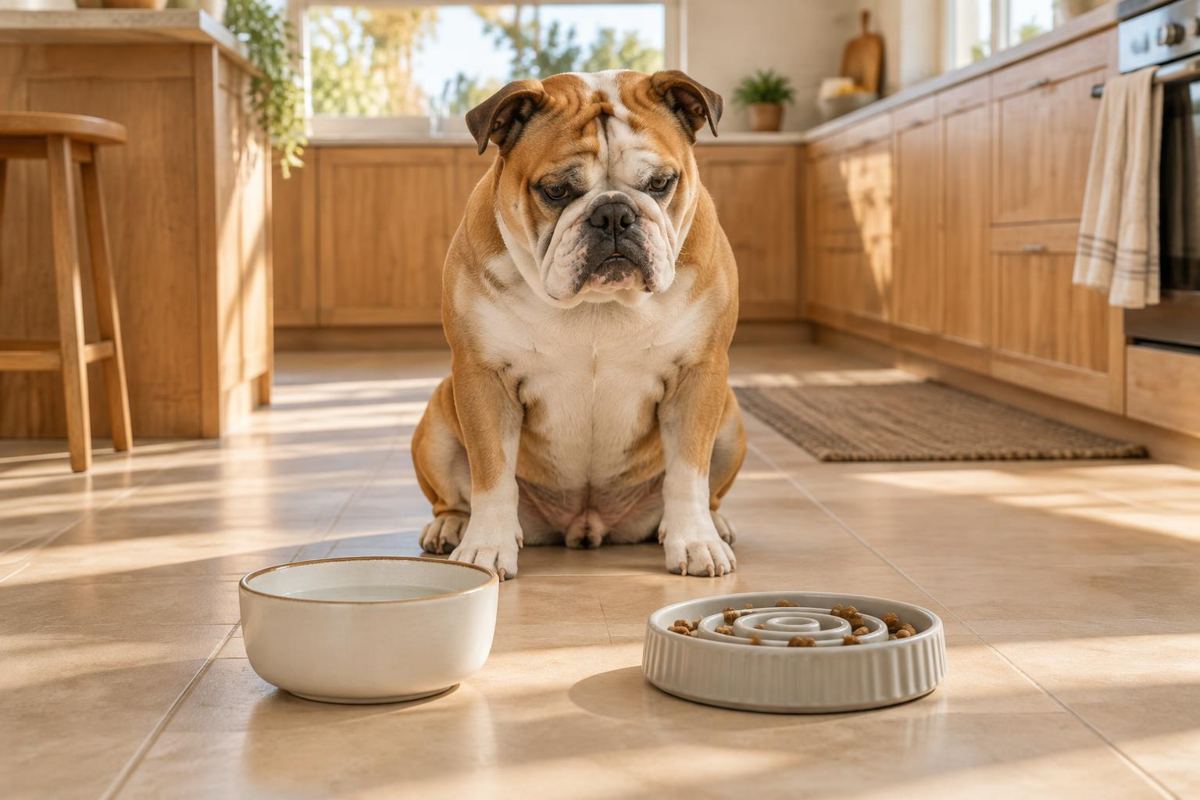
We start with the dog, not the picture on the box. A slow feeder spreads a meal around shapes inside a bowl. Those shapes only help if your dog can reach the food. If dinner stays stuck in the corners, it isn't the right bowl for them.
Watch your dog eat from their usual bowl first. Where does their muzzle sit? Do they use their tongue to pick up the last bits? Does the bowl move across the floor? We check these things before choosing a new shape. Measure your feeding space too, so you know how much room you have.
You don't need the deepest maze or the trickiest pattern. Start with food your dog can reach easily. Stay nearby for the first meals. If the new bowl isn't working, put the remaining food in their usual bowl. There's no need to make them keep trying.
How do width and depth change the fit?
Look at the bowl's outside width, then look between the ridges. These are two different measurements. A wide bowl can still have narrow food channels. We want your dog to reach the whole meal, including the corners and the last few pieces.
Check the depth as well. Your dog might reach food near the top but leave bits at the bottom. Watch from the side as they eat. Can their tongue reach without their face pressing into the sides again and again? If food stays out of reach, try a different feeding surface.
Flat-faced dogs have different muzzle sizes. We don't assume the bowl that suits one dog will suit another. Tongue reach and eating habits differ too. Ask us for the listed measurements if you can't find them. Compare the shape as well as the numbers before ordering.
What should you check about ridge height and spacing?
We look for open food channels your dog can use without biting the bowl. Tall ridges and tight spaces can make the last part of dinner awkward. Lower, wider sections can be an easier place to start. There isn't one ridge height that suits every dog.
Put a little food in the easiest parts first. You don't have to fill every channel. Watch your dog investigate. Are they finding the food, or grabbing the edge of the bowl? If they bite it, keep pushing it away or stop eating from it, pause and check the layout.
Photos are useful for comparing patterns. They can't tell us exactly how your dog will use a bowl. We treat the first meals as a fit check, not a task your dog has to finish. Keep their usual bowl nearby so you can move the food if needed.
Does a non-slip base matter?
A bowl that slides around can be awkward, even if the food is easy to reach. We put it on a level floor with room for the dog to stand normally. Keep it away from busy doorways so dinner isn't interrupted by people walking past.
Check the product's description. Not every slow feeder has a non-slip base. Rubber feet, the shape of the base and your floor can all affect how it moves. If it slides, stop and adjust the setup. Don't wedge it into a tight spot your dog can't use comfortably.
The JW Non-Slip Dog Bowl Mat 47.5 x 38cm, Catches Drips & Crumbs goes under a bowl. Compare its size with your bowl and feeding space before buying. It is a separate item. It won't make narrow or deep food channels easier for your dog to reach.
Which existing Scream bowls can you compare?
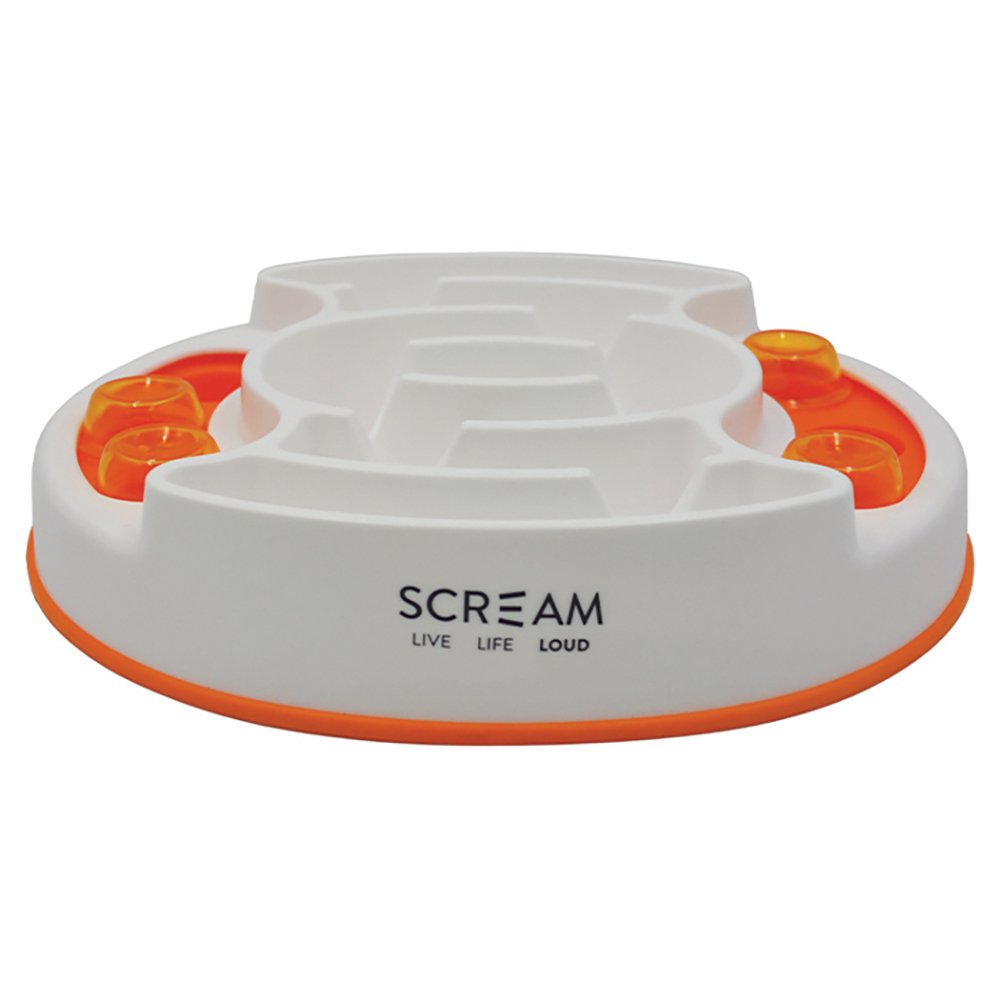
The Scream Slow Feeder Puzzle Bowl for Bulldogs & Frenchies, 27 x 31cm measures 27 × 31 cm. It has a centre maze and two side food sections. We'd check your dog can reach all three, right out to the edges. Watch where the last pieces of food end up.
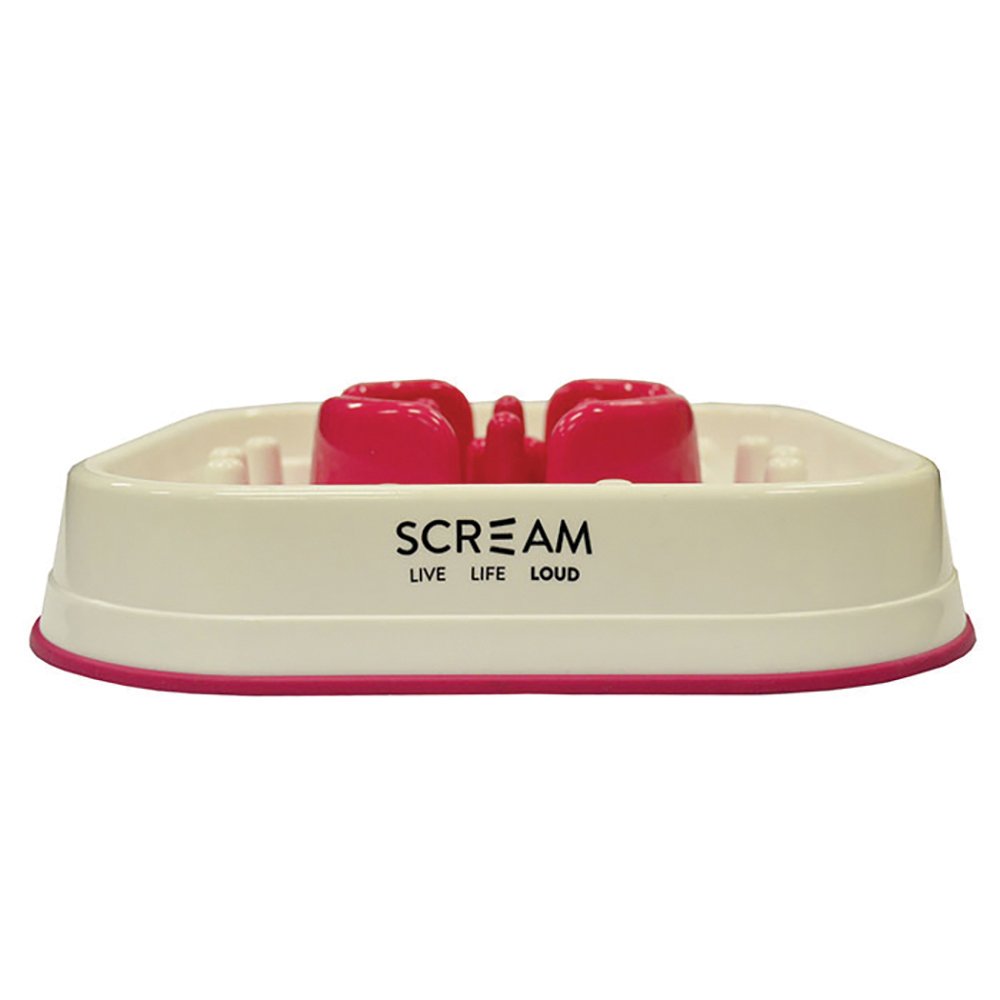
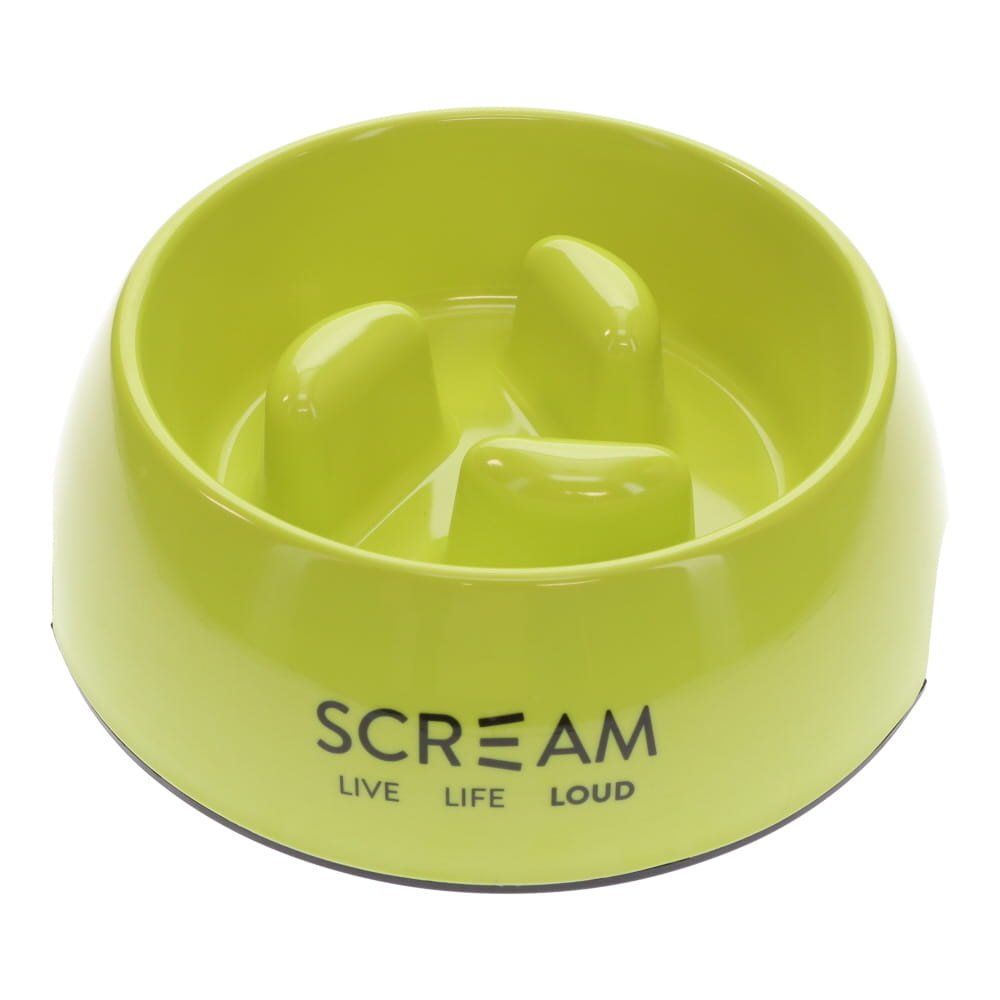
The pink Scream slow-feed bowl measures 28 × 28 × 7 cm. The green Scream Anti-Gulp bowl has raised sections. Look at each shape and the current measurements on its product page. Similar names don't mean these are the same bowl.
Our Flat-Faced Enrichment Kit includes the Puzzle Bowl, lick mat, treat tumbler and tug toy. Each is also available separately. A lick mat holds a spread of suitable food. A tumbler releases treats as it rolls. They're different jobs, and neither replaces checking that a meal bowl fits your dog.
How do you introduce it step by step?
First, inspect the bowl and wash it as the instructions say. Use your dog's familiar food. We start with a small part of their normal meal and keep the rest ready in the usual bowl.
Next, put that portion in the widest, easiest sections. Leave some food easy to pick up. Don't pack it down between the ridges. Put the bowl on a level surface and stay with your dog while they try it.
Watch the whole meal, not just the first mouthful. Check the corners and the bottom of the channels. If your dog can't reach the last bits, move them to the usual bowl. Do the same if they start biting the bowl or give up.
Keep the next introduction easy too. We only spread food into more sections once we've seen the dog reach it. There's no rush to make dinner harder. Afterwards, remove leftovers, clean and inspect the bowl. Count all the food within your dog's usual daily amount.
What are the common mistakes?
Buying by the breed picture is one. Choosing the deepest maze because it looks more challenging is another. We check the actual shape and watch the dog use it. A harder task isn't automatically a better one.
A heavily filled bowl can hide the channels. You might not notice that the shape is awkward until most of the food is gone. Start with a small portion so you can see what's happening. Stay nearby. That way you can spot biting, sliding or food your dog can't reach.
Don't add extra food just because a new bowl makes dinner interesting. Use their normal daily amount. We also keep the food and feeding place familiar while introducing a bowl. Changing everything at once makes it harder to tell what's working. Start simply and change one thing at a time.
Is it dishwasher safe, and how should you clean it?
Read the instructions for that exact bowl. We don't assume all plastic feeding products can go in the dishwasher or handle the same water temperature. If the maker hasn't said it's dishwasher safe, ask before putting it through a cycle.
Remove food from every channel. Wash as instructed, rinse and let the bowl dry before storing it. While you're cleaning, look for cracks, rough edges and places your dog has chewed. If it's damaged, take it out of use rather than serving another meal in it.
Wet food and dry food leave different bits behind. Check the hidden corners as well as the open sections. Keep watching your dog eat, even after the first meals go well. If their size or eating habits change, check the fit again. A clean bowl still needs to be one your dog can use.
Which products help?
What else do owners ask?
What is the best slow feeder for flat-faced dogs?
There isn't one best bowl. The Scream Slow Feed Puzzle Bowl (27 × 31 cm) is where we'd start. Check your dog can reach every channel.
What if my dog cannot reach the last food?
Move the food to an accessible bowl and choose a different feeding surface.
Can I serve wet food?
Follow the bowl's instructions. Start with a small amount and check your dog can reach it.
Is a lick mat the same as a slow-feed bowl?
No. A lick mat holds a spread of food; a shaped bowl holds a meal. Supervise the first uses of either.
Do I need the complete kit?
No. Each item can be ordered on its own. Choose the products you need.
Related guides
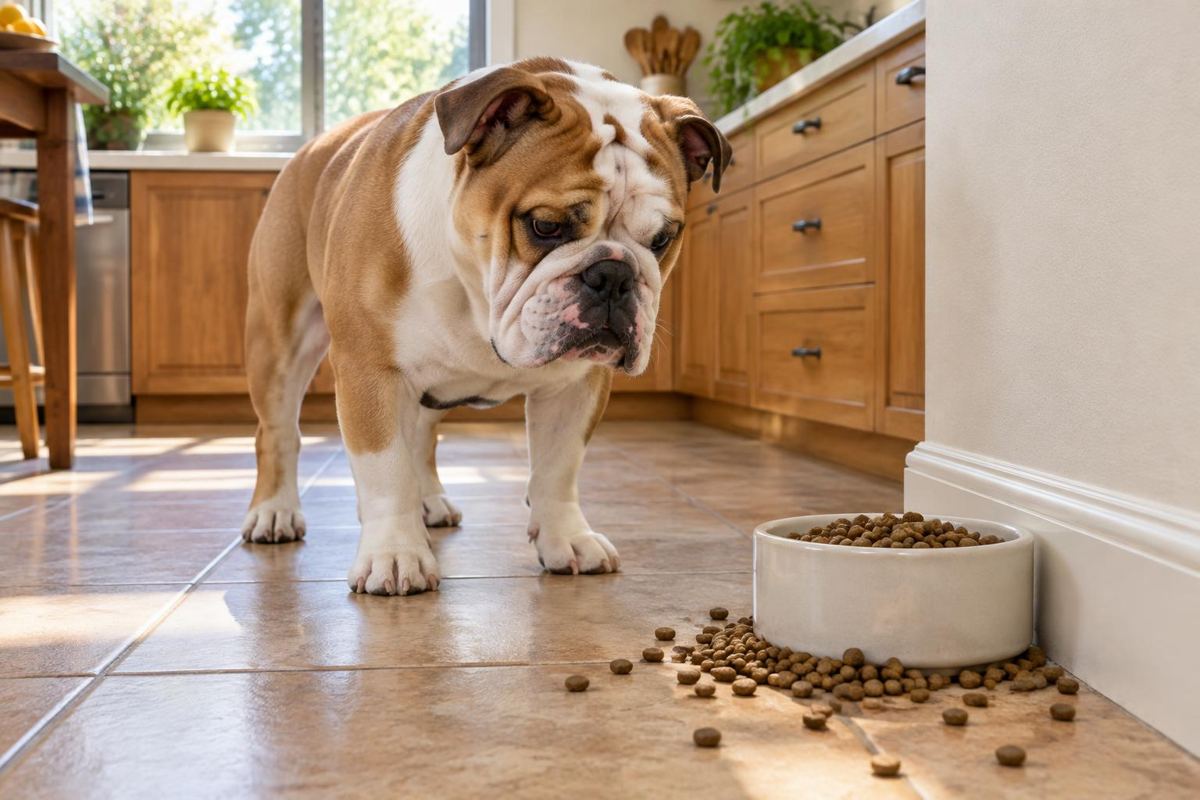
Bowl slides and spills
Why does my bulldog push their bowl across the floor? (And what actually helps)
Most bulldogs push their bowl because their short face hits it nose-first.
Read the guide →
Too hot to walk
Is it too hot to walk my bulldog? (And how to keep them busy indoors)
If it's hot or humid, or the footpath is too hot for the back of your hand for five seconds, it's too hot to walk a bulldog.
Read the guide →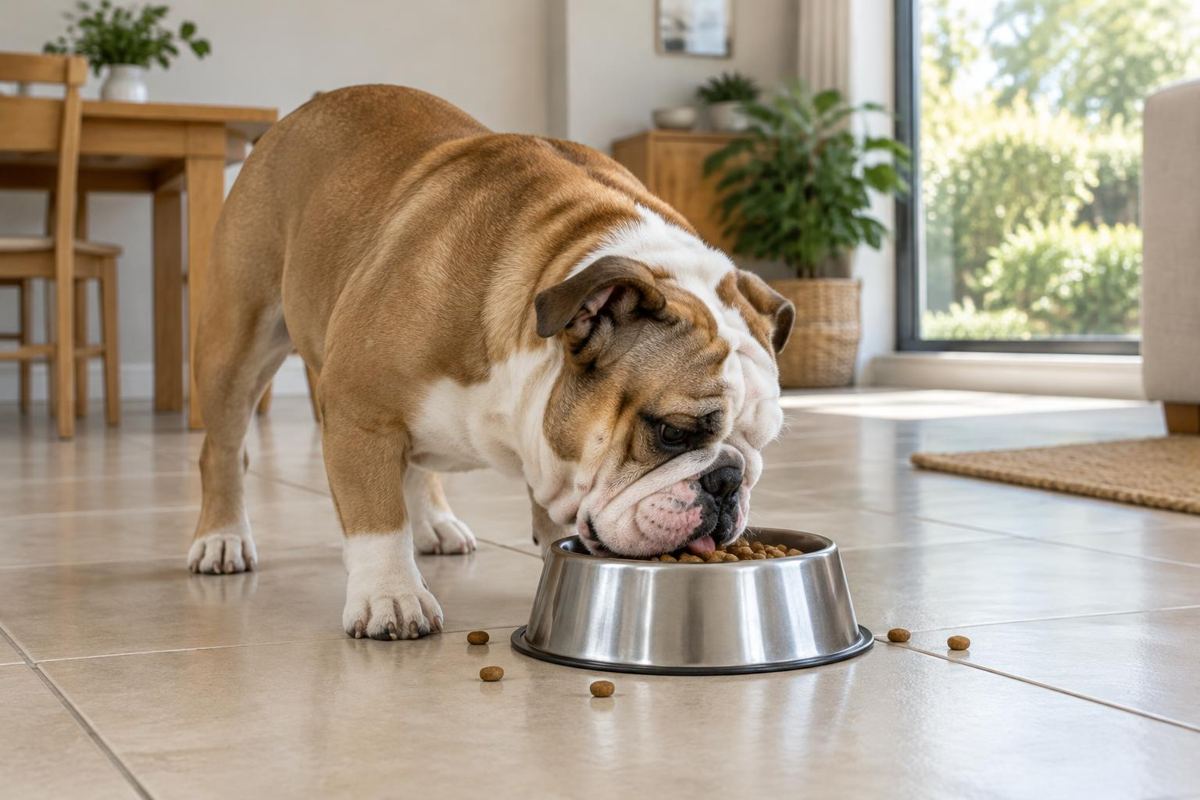
Eats too fast
Why does my bulldog eat so fast? (And what actually helps)
Most bulldogs eat fast out of habit or competition: they learned as puppies to beat their littermates to the food, or they're racing another pet in the house.
Read the guide →10% off your first order
Single items only. Your code arrives by email.
Sources (1)
Product details and size ranges come from the linked catalogue pages. General safety references are listed below.