
Quick answer
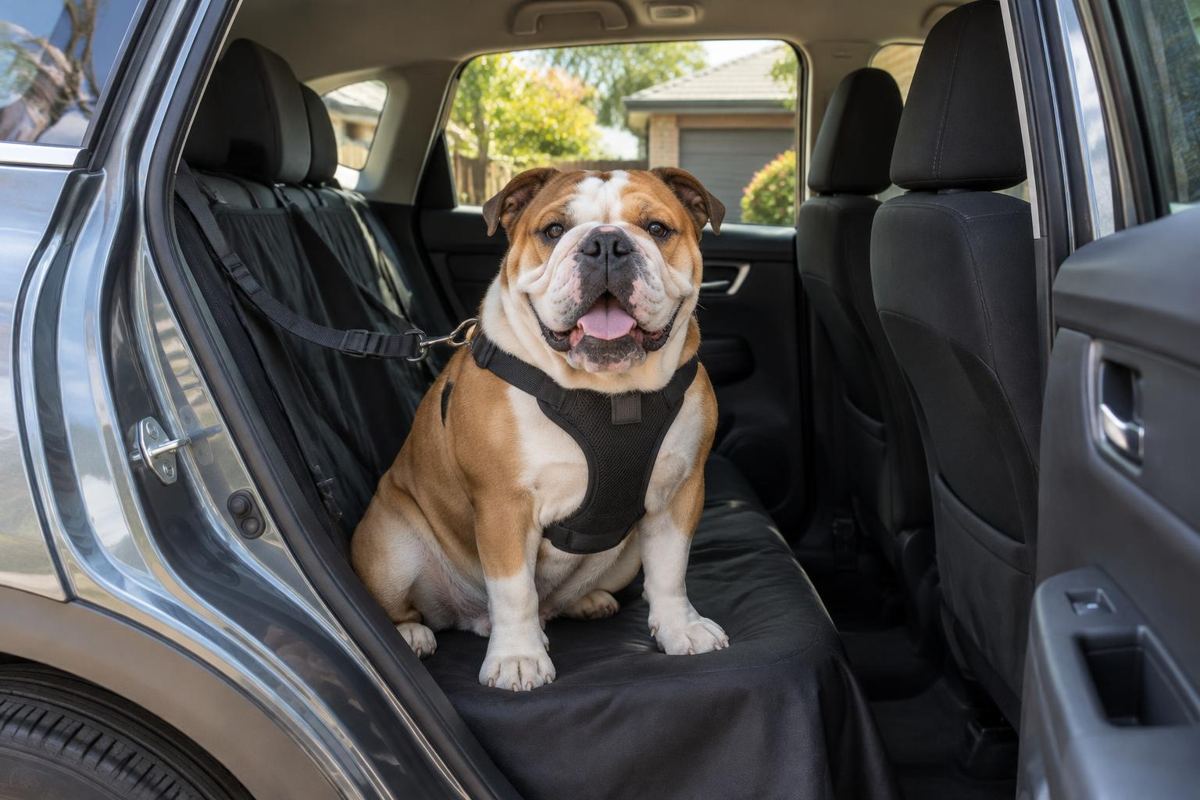
Restrain your bulldog in the back seat with a properly fitted car harness or a secured crate, keep them off your lap, and never leave them alone in a parked car. In NSW, Queensland, Victoria and South Australia you must not drive with a dog on your lap, and you must keep proper control of the car. Most states don't have a road rule that says a dog inside the cabin must be restrained, but state transport authorities and the RSPCA recommend restraint. Flat-faced dogs overheat far more easily than most breeds.
What it looks like
Most owners recognise at least one of these:
- Your bulldog climbs from the back seat into the front, or tries to get onto your lap at the lights.
- They pace, slide off the seat on corners or stand with their head out the window.
- They drool in long strings, lick their lips, yawn and sometimes vomit before you've left the suburb.
- They hesitate at the car door, or you have to lift them in every time.
- You wonder whether a few minutes in the car with the windows down is okay. It isn't.
Why it happens
A loose dog moves with the car
A dog sitting loose on a seat has nothing holding it in place when you brake, corner or swerve. RSPCA Australia notes that a restrained dog is less likely to distract the driver, less likely to be thrown forward in a sudden stop, and less likely to jump out of a window. Agriculture Victoria puts it plainly: an unrestrained dog can become a projectile in a crash.
The rules focus on the driver, not the dog
Road rules are mostly about driver control. In NSW, rule 297 of the Road Rules 2014 says a driver must not drive if a person or animal is in the driver's lap. Queensland's Department of Transport and Main Roads says it is an offence to drive with an animal in your lap or without proper control of your vehicle. Victoria's Department of Transport says the same about laps, and also bans leading an animal from a moving vehicle. Animal welfare laws then add rules for utes and trailers (see the state table below).
Short noses and heat don't mix
Dogs cool themselves mainly by panting, and RSPCA Queensland notes that panting isn't enough in extreme heat. A Royal Veterinary College study of UK vet records found that English bulldogs had about 14 times the risk of heatstroke of Labradors, and French bulldogs about 6 times. Dogs that are heavier than average for their breed were also at higher risk.
Parked cars heat up fast
RSPCA Queensland says cars can reach up to 73°C on a hot summer's day, and pets can still overheat with the windows down or the car parked in shade. RSPCA Australia warns that dogs can suffer fatal heat stress even in mild weather.
Motion, nerves or both
Vets describe car sickness as a mix of motion affecting the brain's balance centre and stress during travel. The PDSA notes that puppies are commonly affected, and that dogs who weren't introduced to the car gradually are more likely to have it. RSPCA NSW adds that a dog who has been sick in the car can start to dread the next trip, which makes the problem harder.
The rules, state by state
These are summaries, not legal advice. Check your state's road and animal welfare rules before a trip, especially if you're crossing a border.
| State | Inside the car | Utes and trailers |
|---|---|---|
| NSW | Must not drive with an animal in your lap (Road Rules 2014, rule 297, maximum 20 penalty units). RSPCA NSW says dogs must be properly restrained under the Prevention of Cruelty to Animals Act and the Road Rules. | Must be restrained or enclosed so they can't fall (POCTA Act s 7). |
| QLD | Offence to drive with an animal in your lap or without proper control. TMR recommends animals in the cabin be restrained. | Must be secured so they can't fall or be injured (Animal Care and Protection Act s 33). |
| VIC | Must not drive with an animal on your lap. No road rule on securing animals inside. Don't leave a dog alone in a car for more than 10 minutes when it's 28°C or hotter, and never in the boot of a sedan. | Must be tethered or caged; insulating material on metal trays at 28°C or more. |
| SA | Same lap and control rule (Australian Road Rules, rule 297). | Must be enclosed or restrained (Dog and Cat Management Act s 45). |
| WA, TAS, ACT | Check your state road authority for in-cabin rules. | Must be crated, tethered or restrained so they can't fall or jump (see RSPCA table). |
| NT | Check the NT road authority for in-cabin rules. | Strictest: dog must ride in the passenger compartment and be secured. |
RSPCA Australia's advice for all states is the same: restrain your dog in the back seat with a car restraint fitted as the maker directs. Agriculture Victoria also advises against letting dogs put their heads out the window, because dirt and debris can injure their eyes, ears and nose.
When to talk to your vet
- Your bulldog vomits, drools heavily or retches on most car trips, even short ones
- Car sickness is getting worse over time rather than better
- Your dog shakes, whines, toilets in the car or refuses to get in
- Your dog pulls away or seems sore when you fit a harness
- Heavy panting that won't settle, very red or pale gums, or a deep red tongue after time in the car
- Wobbliness, confusion, weakness, vomiting or collapse on a warm day
- Noisy or laboured breathing during or after travel
If you see any of these, call your vet.
Heatstroke is an emergency. RSPCA Queensland advises going to the nearest vet straight away, even if your dog seems to be recovering. For car sickness, the PDSA advises talking to your vet early and not using human or non-prescription medicines.
The tools that help
The biggest fix isn't a product. It's a routine: never leave your bulldog alone in the car, keep air moving to the back seat, plan stops, and build up trips slowly. Our car trips problem page has everything in one place. Here's what we use with our own dogs.
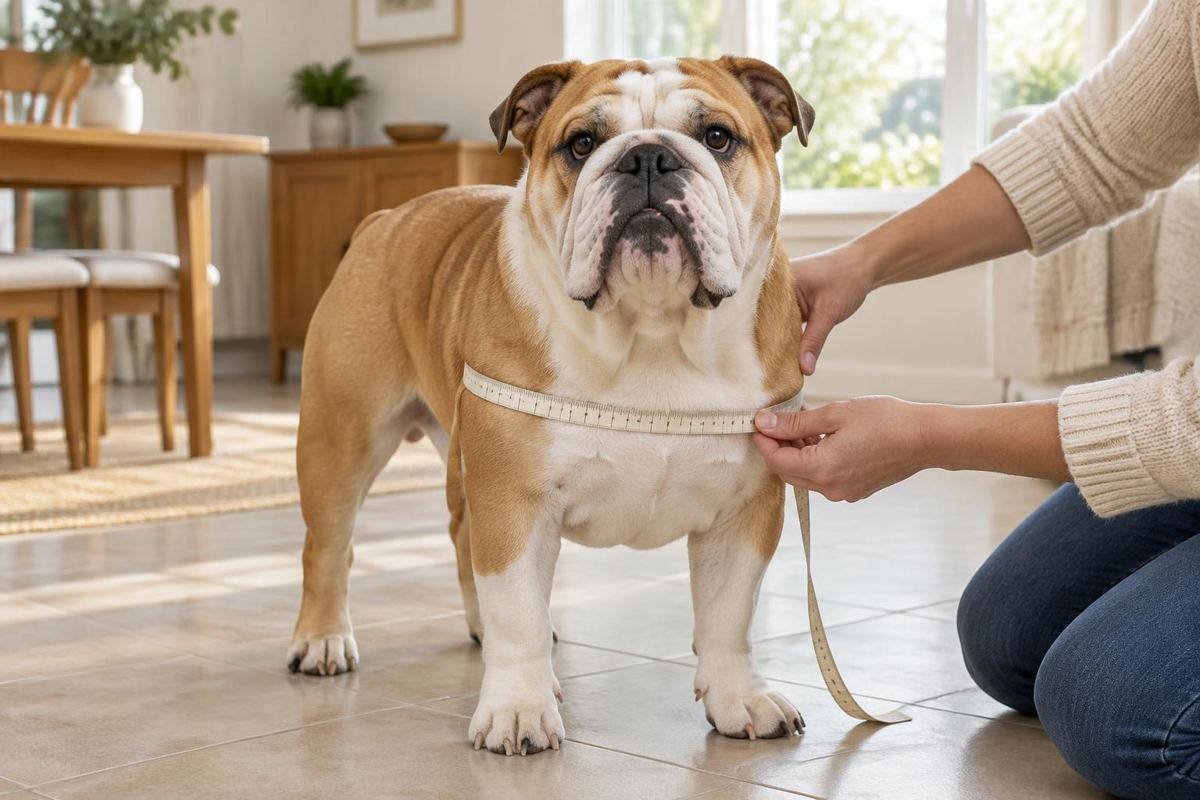
Measure the chest first
A car harness is sized by chest girth, not weight.
- Stand your bulldog square on a flat floor.
- Wrap a soft tape measure around the widest part of the ribcage, just behind the front legs.
- Keep the tape snug but not tight. You should be able to slide two fingers under it.
- Measure twice and write down the larger number.
Bulldogs have deep, barrel-shaped chests, so guessing is easy to get wrong. If your dog is near the edge of a size, measure again and check the fit against the harness instructions. RSPCA NSW says a car harness should be neither too loose nor too tight, and your dog should be able to sit, stand and lie down naturally.
Prestige Dog Car Safety Harness, Large
Prestige Dog Car Safety Harness, Large Black, $42.95 Fits a 60–70 cm chest. If your bulldog roams around the car, this harness keeps them restrained in one spot, so they're not climbing into the front or sliding off the seat on corners. Fit it in the back seat as the maker directs.

Prestige Dog Car Safety Harness, XLarge
Prestige Dog Car Safety Harness, XLarge Black, $43.95. Fits a 70–80 cm chest. Same idea for bigger, broader-chested dogs. If your tape reads close to 70 cm, measure again. At exactly 70 cm, choose XLarge.
If your Frenchie measures under 60 cm, neither will fit properly, so don't size down and hope.
A note on testing: there is no Australian standard for dog car restraints, and RSPCA Australia says many products on the market haven't been crash tested. We don't make crash-safety claims about these harnesses. What they do is keep a wandering dog restrained in its seat.
If heat is the bigger worry for your dog, our Too hot to walk page covers warm-weather routines. Bringing home a new pup? See New puppy.
Step by step
- Day 1: harness on, indoors. Put the harness on at home for a few minutes with treats, then take it off. Repeat until your dog is relaxed wearing it. RSPCA NSW recommends harness training before using it in the car.
- Days 2–3: the car stays parked. With the doors open, scatter a few treats on the back seat and let your dog explore. Don't force them in. If they back away, reward that too and end the session.
- Days 4–5: sit inside. Once your dog gets in willingly, clip them in the back seat with the harness, give a chew, and sit for a few minutes.
- Week 1: engine on. Run the engine for a minute or two while your dog settles, then turn it off and let them out.
- Week 1–2: five-minute drives. The PDSA suggests starting with trips of no more than five minutes. Drive around the block and home again.
- Before every trip: food and a walk. Feed at least 2–3 hours before you leave and walk your dog first, as the PDSA recommends.
- During the trip: cool air and breaks. Make sure the air conditioning reaches the back seat. Stop regularly for water and a toilet break, with your dog on lead outside the car.
- Progress slowly. Add a few minutes at a time. If drooling or panting starts, go back to the last length that was comfortable.
- Every trip: never leave them. If you need to stop somewhere your dog can't come, take them with you or leave them at home.
Free plan
Free: Car harness measuring card. Printable, one page.
FAQ
Is it illegal to have my dog unrestrained in the car in Queensland?
Queensland's road rules don't specifically require a dog inside the cabin to be restrained, but driving with an animal in your lap or without proper control is an offence. TMR recommends restraining animals inside the vehicle.
Can my bulldog sit in the front seat?
It isn't banned outright, but RSPCA Australia advises restraining your dog in the back seat. Anywhere they can reach your lap or the controls risks a driver control offence.
Can I leave my bulldog in the car with the windows down for a few minutes?
No. RSPCA Queensland says pets can still overheat with the windows down or the car in shade, and in Victoria leaving a dog alone in a car for more than 10 minutes at 28°C or more is prohibited.
Can I clip the seatbelt tether to my dog's collar?
RSPCA NSW advises attaching to a properly fitted car harness, not a collar.
Why does my bulldog drool so much in the car?
Drooling, lip licking and yawning are common signs of car sickness or travel stress. If it happens on most trips, talk to your vet.
What size car harness does my French bulldog need?
Measure the chest at the widest point behind the front legs. Our harnesses fit 60–70 cm (Large) and 70–80 cm (XLarge). If your Frenchie measures under 60 cm, neither will fit properly, so don't size down and hope.
Related guides
Car trips
How to measure a bulldog for a car safety harness
How to measure your bulldog's chest for a car harness. Prestige Large fits 60–70 cm, XLarge fits 70–80 cm. At exactly 70 cm, choose XLarge.
Read the guide →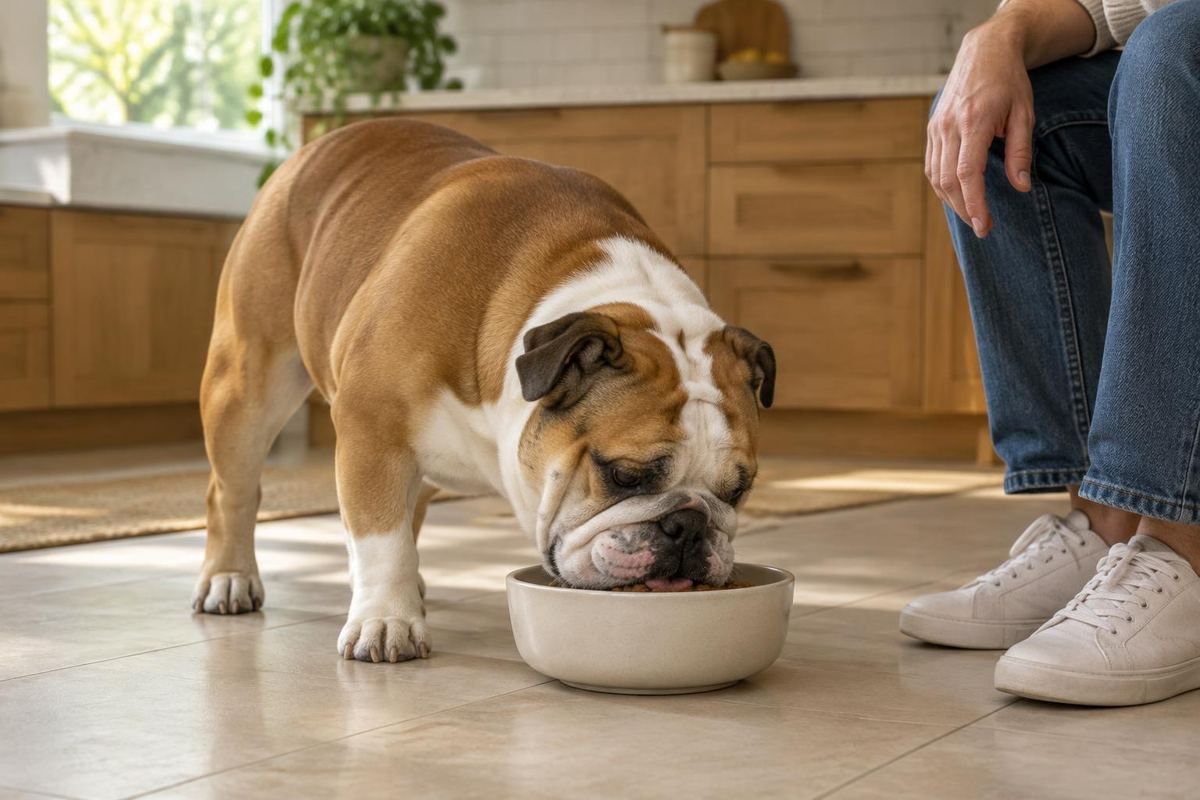
New puppy
Bulldog puppy checklist: feeding, toys and car travel
A practical bulldog puppy checklist: choose accessible feeding products, car harnesses sized by chest, comfort items and supervised enrichment for flat-faced dogs.
Read the guide →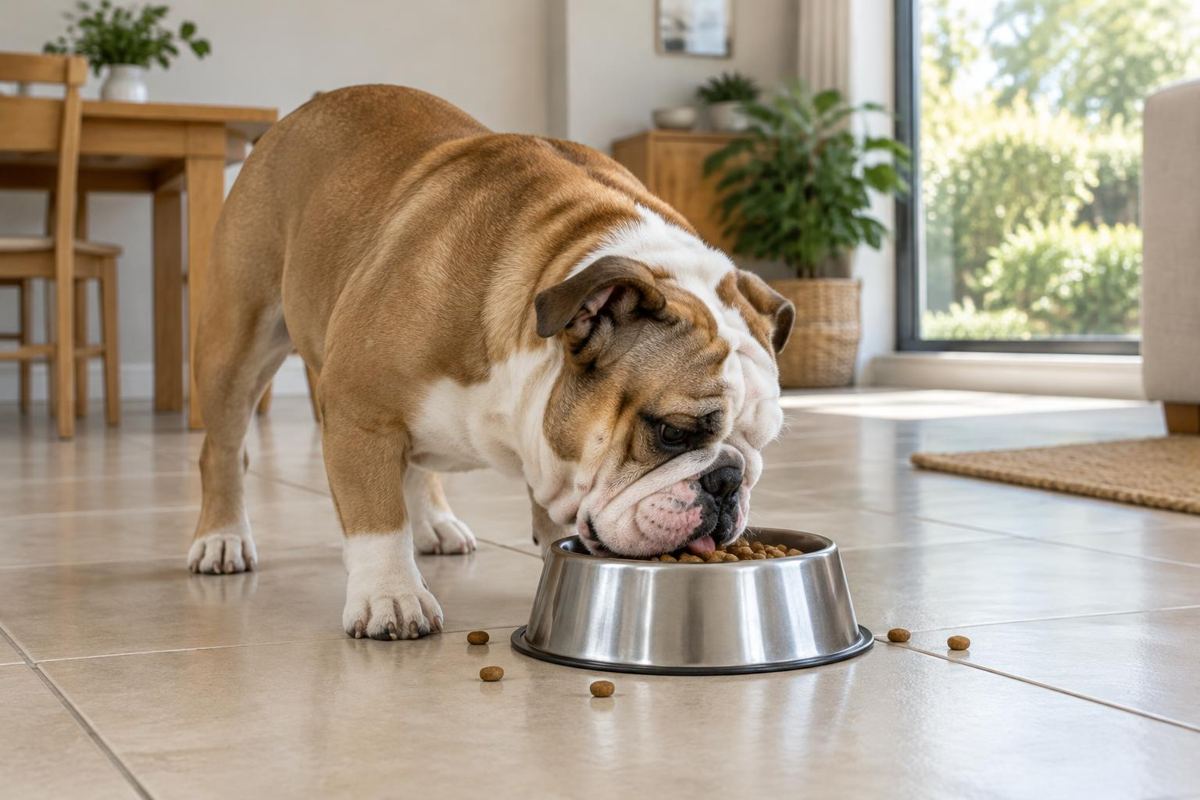
Eats too fast
Why does my bulldog eat so fast? (And what actually helps)
Most bulldogs eat fast out of habit or competition: they learned as puppies to beat their littermates to the food, or they're racing another pet in the house.
Read the guide →Sources (13)
- RSPCA Australia Knowledgebase, Do I need to restrain my dog when travelling in my car?
- RSPCA Australia Knowledgebase, Is it legal to have unrestrained dogs on ute trays or other open vehicles?
- RSPCA Australia, Tips when planning a road trip with your dog
- Queensland Government (TMR), Other common road rules
- NSW Road Rules 2014, rule 297 (AustLII)
- SA Australian Road Rules, rule 297 (AustLII)
- Department of Transport and Planning Victoria, Animals and driving
- Agriculture Victoria (Animal Welfare Victoria), Travelling with dogs
- RSPCA NSW, Helping your dog enjoy the journey
- RSPCA Queensland, Hot cars = hot dogs
- RSPCA Queensland, Heatstroke and staying cool
- Royal Veterinary College VetCompass, flat-faced dogs at increased risk of heat stroke
- PDSA, Car sickness and motion sickness in dogs