Why does my bulldog eat so fast? (And what actually helps)
Bowl empty before you've turned around? Why bulldogs gulp, when it's a vet matter, and the bowls that make dinner take longer.
By the Bulldoggy Co team · Updated 10 Oct 2026
Quick answer
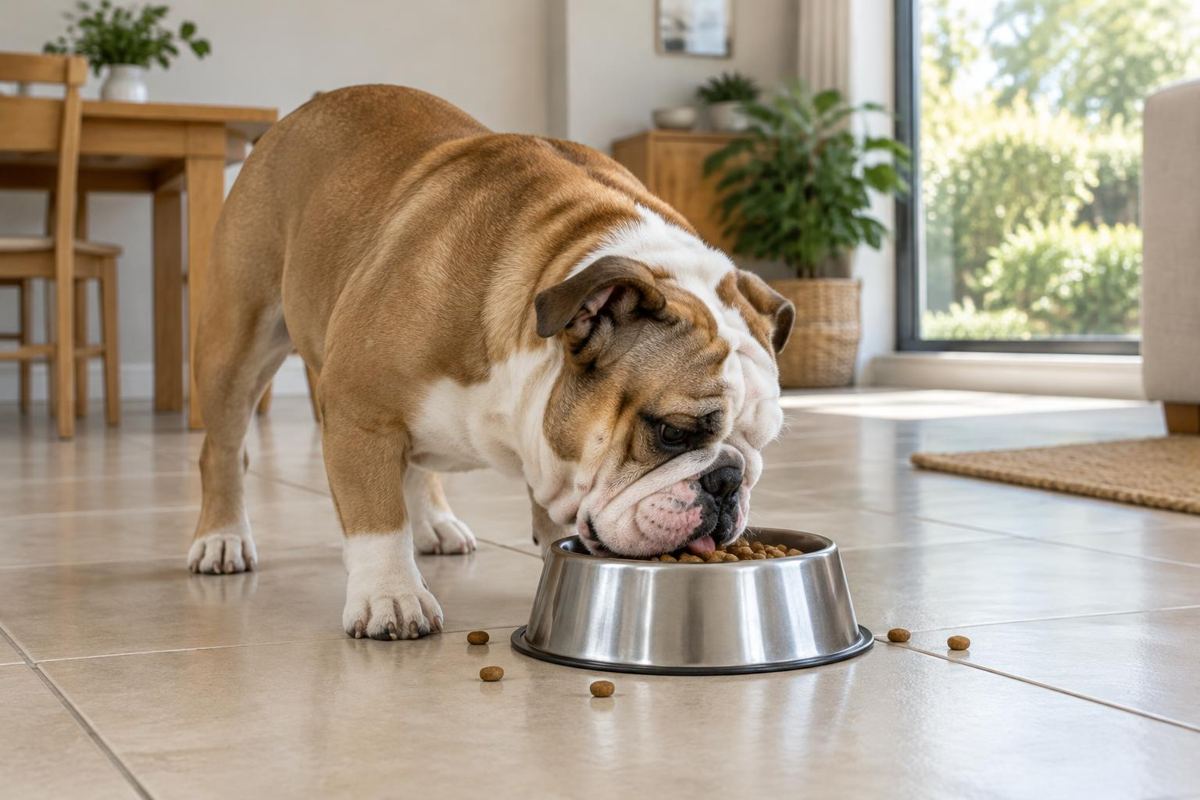
Most bulldogs eat fast out of habit or competition: they learned as puppies to beat their littermates to the food, or they're racing another pet in the house. Vets suggest splitting the day's food into smaller meals and slowing each one down with a slow feeder bowl, a food puzzle or by scattering it. If fast eating comes with vomiting, a swollen belly or a sudden jump in appetite, call your vet.
What it looks like
You put the bowl down, turn around, and it's empty. It can look as if dinner has been inhaled whole. Common things you might notice:
The bowl is licked clean in under a minute.
Your dog barely seems to chew, especially with dry food.
Gulping, snorting or coughing while eating.
Bringing the food straight back up a few minutes later, often still whole.
Lots of burping or wind after meals.
Staring at you, or at the other dog's bowl, the moment they finish.
Why it happens
Competition, past or present
Dogs may eat quickly to get their share before other pets do. Some carry the habit over from puppyhood, when they competed with littermates for milk and food. Some dogs also speed up when a person walks near their bowl.
A plain bowl makes dinner too easy
A standard bowl puts the whole meal in one easy spot, so there's nothing to slow a keen eater down.
One big meal a day
Feeding the whole day's food in one go means a hungrier dog and a bigger bowl to get through. Veterinary surgeons list feeding one large meal a day as a risk factor for bloat, and Australian emergency vets recommend several small meals through the day instead. (ACVS; Animal Referral & Emergency Network)
The flat-faced factor
Short-nosed breeds commonly have stomach and swallowing troubles that can look like a "fast eating" problem. In one study of 98 flat-faced dogs having airway surgery, drooling, regurgitation or vomiting was reported in 93% of French bulldogs and 58% of English bulldogs. (Kaye et al., 2018) An earlier study of 73 short-nosed dogs with breathing problems found about three-quarters had moderate to severe digestive signs, and the link between breathing and digestive severity was strongest in French bulldogs. (Poncet et al., 2005) So if your dog regularly brings food back up, it may not be speed alone.
Sometimes it's medical
Most fast eating is behavioural, but a change in appetite can have a medical cause. Vets list causes of increased hunger such as diabetes, Cushing's disease, parasites, digestive conditions and some medications. (PetMD, vet-reviewed) This is why a dog who has always eaten fast is different from one who has suddenly started.
When to talk to your vet
Warning signs
A swollen or hard belly, especially after a big meal.
Retching or gagging without bringing anything up, drooling, restlessness or pacing.
Bringing food back up regularly, or vomiting with blood, lethargy or loss of appetite.
Vomiting that keeps going for more than a day or two.
Coughing, choking or noisy breathing at mealtimes.
A sudden increase in hunger, especially with weight change, more drinking or more weeing.
Before any products, the routine matters most. Split the day's food into smaller meals, feed each dog in its own space, and keep exercise away from mealtimes (Australian emergency vets suggest no exercise within an hour either side of eating). (Animal Referral & Emergency Network)
Then you can change the bowl. The research is small but useful. In a trial at Harper Adams University, dogs ate more slowly from a slow feeder bowl than from a standard bowl, though they got a bit quicker with practice. (Buckley & Lees, 2016) The lesson for us: start easy, and swap or rotate bowls when your dog gets too good at one.
Here's what we use with our own dogs. You'll find the full range on our Eats too fast page.
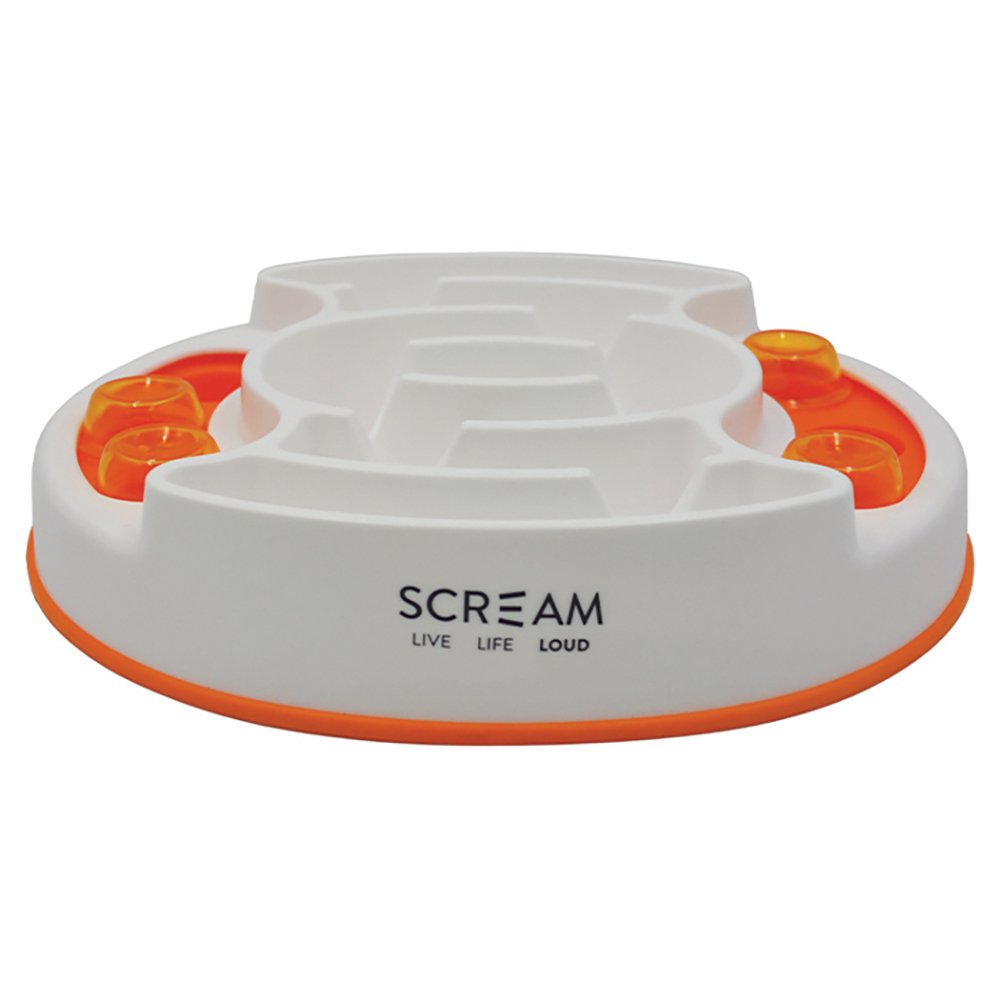
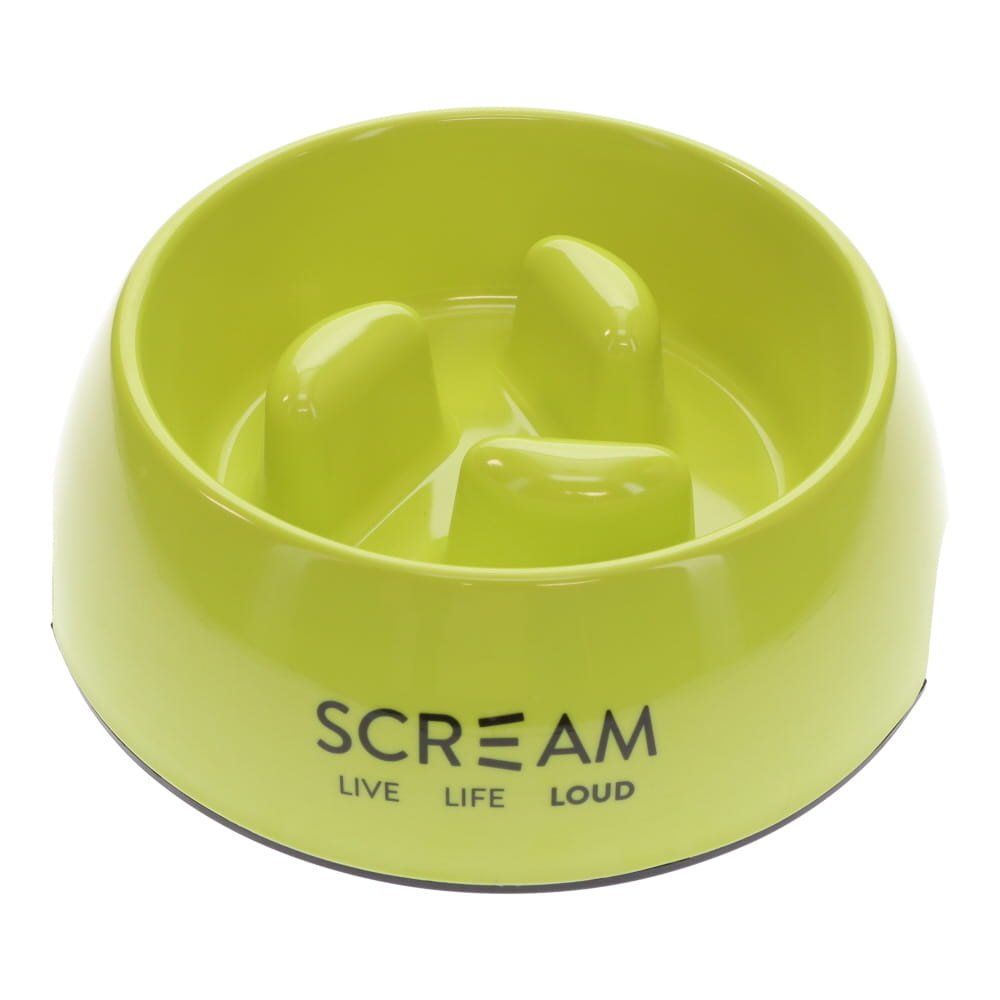
The Scream Slow Feed Puzzle Bowl ($32.95) has a centre maze plus two side sections. Your dog has to work the food out of the maze channels, so dinner takes longer, and the side sections give them extra pieces to find. It's a good next step once a simpler bowl gets easy.
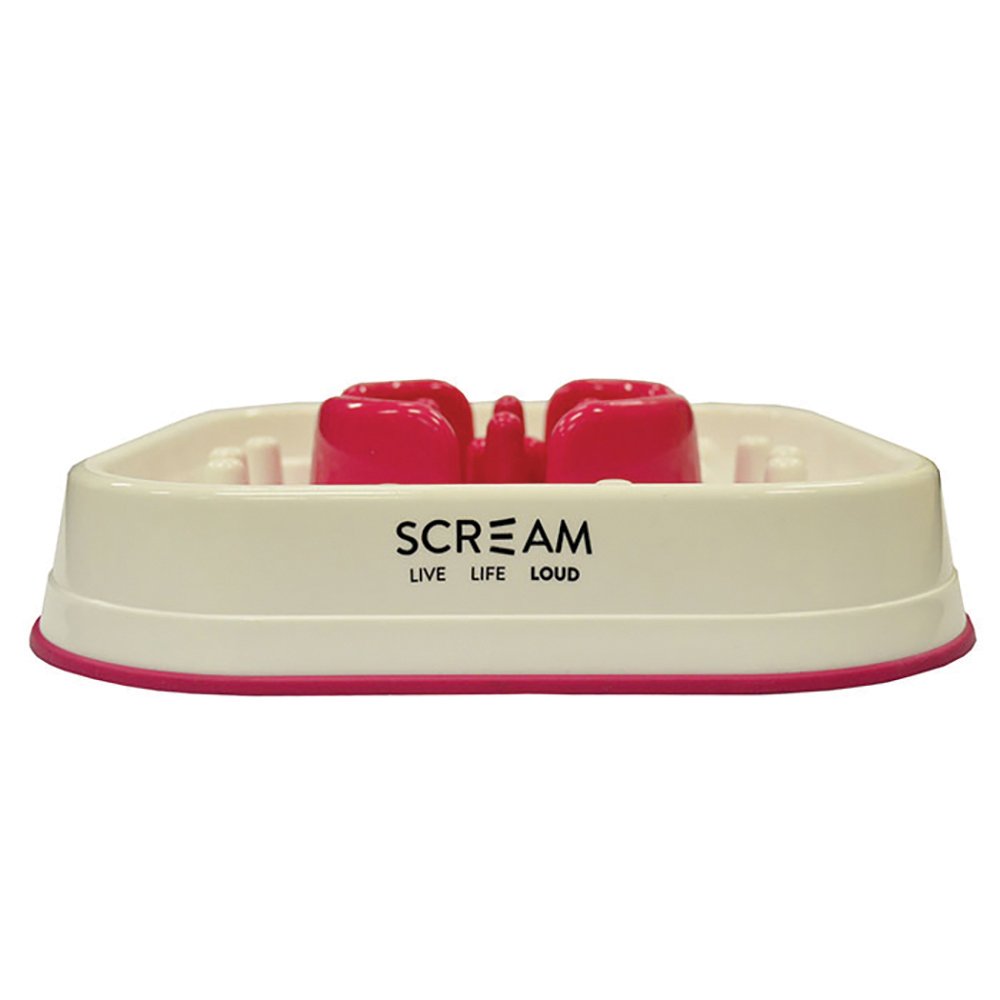
The Scream Slow Feed Interactive Dog Bowl, Pink ($28.95) has raised shapes your dog has to eat around. It's the gentlest starting point if your dog has never used a slow feeder. An easier layout first means less frustration while your dog gets used to eating around obstacles.
Scream Anti-Gulp Slow Feeder Bowl
The Scream Anti-Gulp Slow Feeder Bowl, Green ($39.95) has raised sections your dog has to eat around, so dinner takes longer. It's handy to rotate with the puzzle bowl so your dog doesn't learn one layout too well.
One thing to keep in mind: food in puzzles still counts. RSPCA Australia warns that relying too heavily on food-based enrichment can lead to overfeeding and weight gain, so take puzzle food out of the daily amount, not on top of it. (RSPCA Australia)
Step by step
Day 1: Time a normal meal. Use your phone to time how long the usual bowl takes. Write it down so you can see progress.
Day 1: Split the food. Divide the day's food into at least two meals, or three to four if your vet agrees. Weigh it so the daily total stays the same.
Day 1: Separate the dogs. If you have more than one pet, feed them in different rooms or behind a gate so nobody has to race.
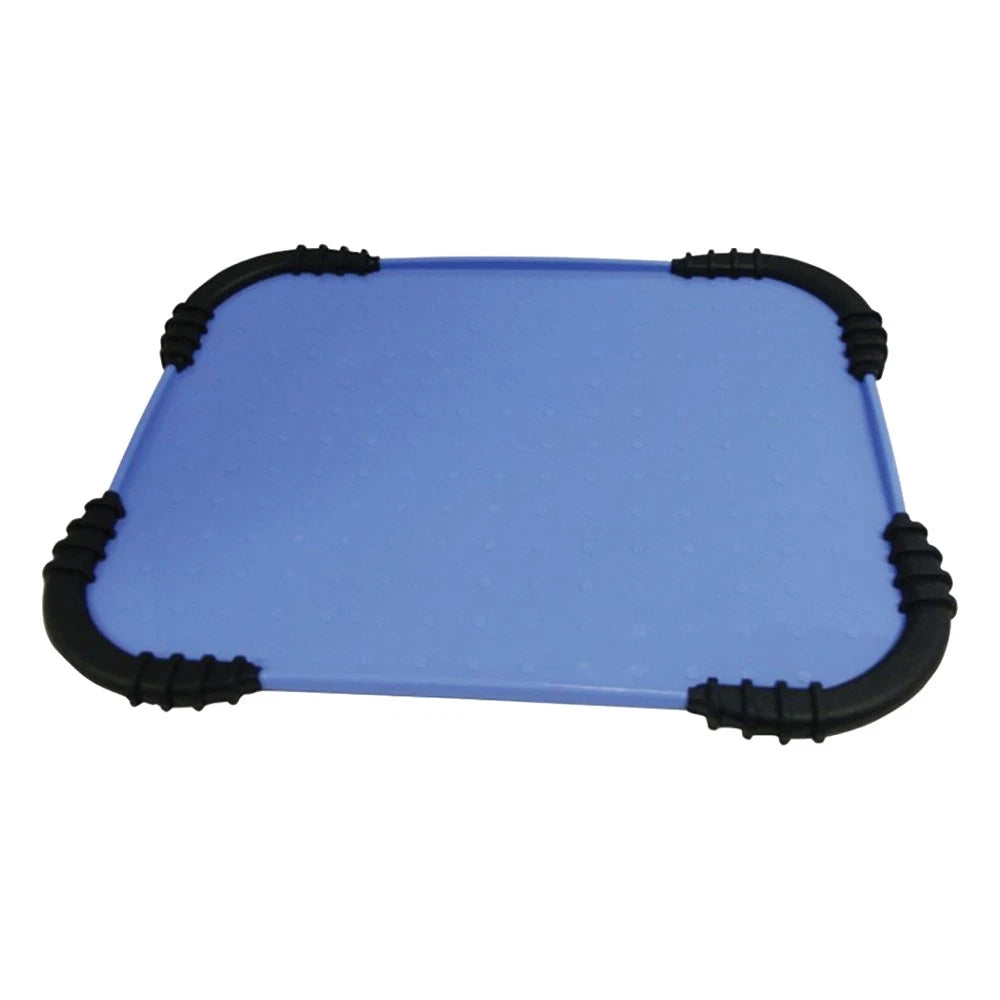
Days 2–3: Introduce the easiest slow feeder. Put the food in the slow feeder bowl on a non-slip mat. For the first few meals, fill the bowl loosely so a little food sits on top and the first mouthfuls are easy.
Days 4–7: Fill it properly. Now spread the food evenly through the bowl. Stay nearby and watch. If your dog walks away frustrated, make it easier again for a few days.
Week 2: Time it again. Compare with Day 1. Keep the calm before and after: a quiet hour around meals rather than a walk or play.
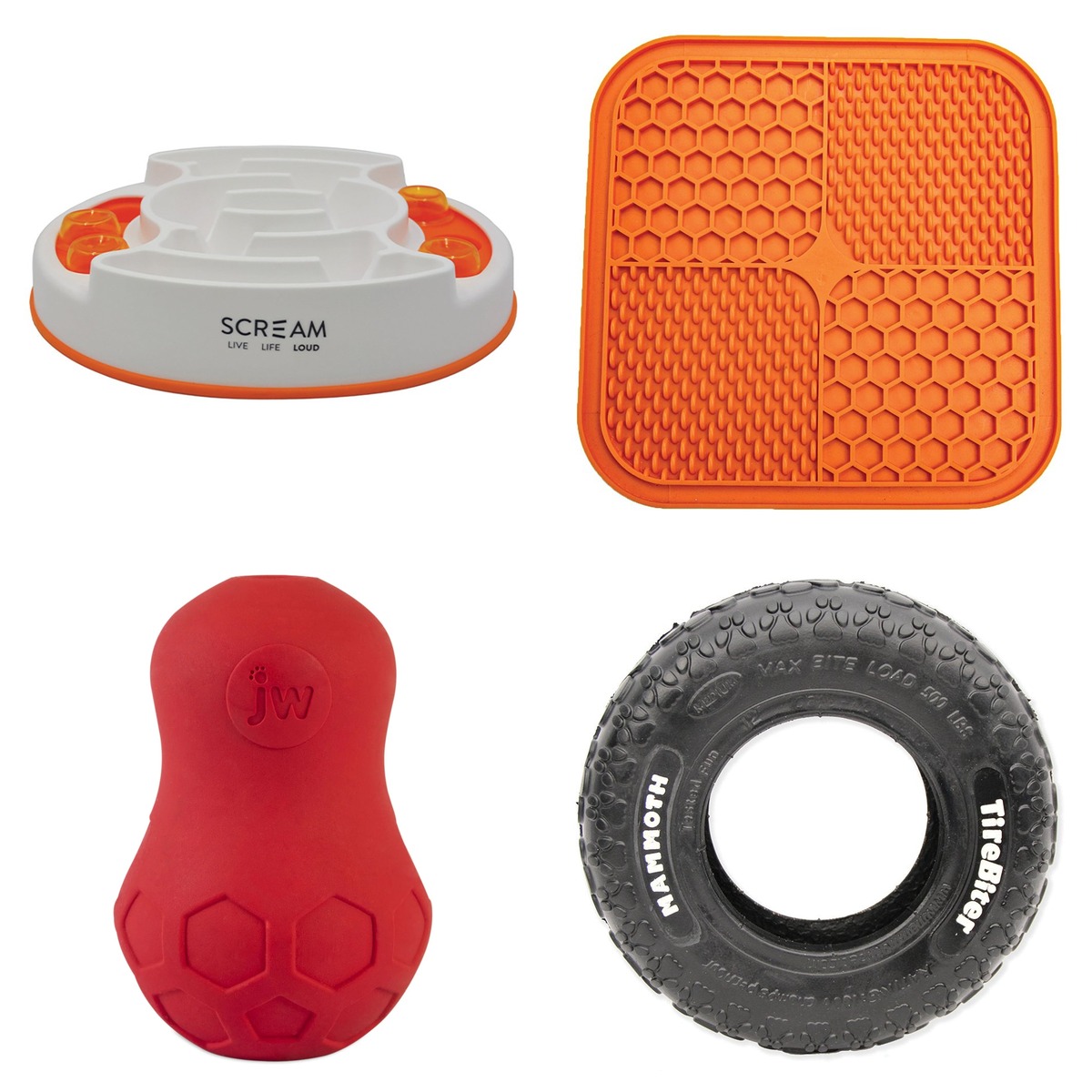
Week 2–3: Make it harder. Move up to the puzzle bowl, or soak dry food briefly so it clings in the channels.
Week 3 onwards: Rotate. Swap between two different bowls, or use a food puzzle for one meal a day, so your dog doesn't get quicker at one layout.
Ongoing: Check weight and stools. Weigh your dog monthly. If they're gaining, cut back the extras.
Any time: Watch for the warning signs above. If food keeps coming back up even with slower meals, book a vet visit.
Free plan
Free: The Slow-Dinner Plan. Printable, one page.
FAQ
Is it bad if my dog eats too fast?
It can be. Vets link fast eating with vomiting, weight gain from not feeling full, and, mostly in large deep-chested dogs, bloat. Slowing meals down is a simple, low-risk change.
Why does my bulldog throw up whole food right after eating?
Bringing up undigested food soon after a meal is often regurgitation rather than vomiting, and it's common in flat-faced breeds. If it happens regularly, ask your vet.
Do slow feeder bowls actually work?
Small studies show dogs eat more slowly from slow feeder bowls and food puzzles than from a plain bowl. Dogs do get quicker with practice, so rotating bowls helps.
Can a slow feeder frustrate my dog?
Some dogs give up on puzzles that are too hard. Start with an easy layout, stay nearby for the first meals, and increase the difficulty slowly.
Should I use a raised bowl for my bulldog?
Raised bowls are listed by veterinary surgeons as a risk factor for bloat. Ask your vet before using one.
Why does my dog eat fast only when the other dog is around?
Competition is a common cause. Feeding each dog in a separate room or behind a gate takes the race out of mealtimes.
My dog has suddenly started acting starving. Is that behaviour?
A sudden change in appetite can have medical causes, so it's worth a vet check before treating it as a habit.