Quick answer
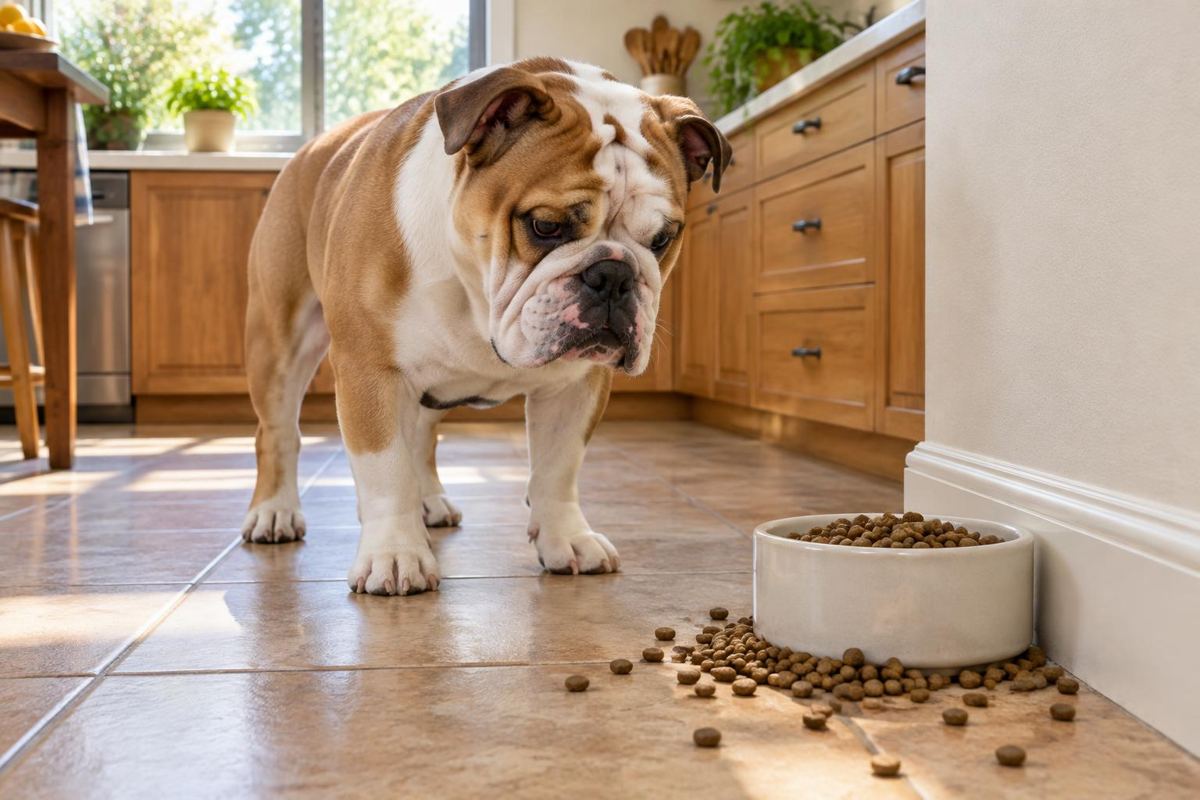
Most bulldogs push their bowl because their short face hits it nose-first. Chasing the last few pieces means shoving the bowl, and a light bowl on a smooth floor slides. Playfulness and learned attention can add to it. A heavier non-slip bowl on a grippy mat, set against a wall, usually keeps the bowl and the mess in one place, but a sudden change in how your dog eats is a reason to see your vet.
What it looks like
You put dinner down in the kitchen. By the time your bulldog has finished, the bowl is under the table, there's kibble across the tiles and a wet trail from the water bowl to the back door.
The usual signs:
- The bowl ends up somewhere different from where you put it.
- Food gets pushed out with the nose and eaten off the floor.
- Bits of food end up in the face folds, on the wall and on the skirting.
- The empty bowl gets shoved at your feet after dinner.
It's common in English and French bulldogs, and most of the time it's a set-up problem rather than a behaviour problem.
Why it happens
A short face meets the bowl first
Flat-faced dogs have a normal-length lower jaw and a compressed upper jaw, according to Mar Vista Animal Medical Center. In everyday terms, a bulldog's nose, chin and cheeks all reach the bowl at about the same time as their mouth does. In a deep or narrow bowl, the last pieces sit where the mouth can't easily reach, so the dog pushes with their face to get at them. Every push moves the bowl.
Teeth that don't line up neatly
Short-nosed dogs often have crowded, rotated or misaligned teeth because there isn't enough room in the jaw. A veterinary specialist notes these dogs are more prone to malocclusion and can find it hard to chew their food effectively. A 2024 study of more than 1,000 dogs found flat-faced dogs had higher odds of malocclusion than other dogs. When food doesn't stay in the mouth easily, more of it ends up on the floor.
Breathing and eating at the same time
The RSPCA notes that flat-faced dogs may have eating difficulties, including choking while eating and regurgitation. Vet hospitals also describe gagging while eating in dogs with breathing problems. A dog who has to lift their head to breathe mid-meal tends to drop food, splash water and nudge the bowl as they go back in.
A light bowl on a smooth floor
A lightweight bowl on tiles, vinyl or polished timber has almost nothing holding it in place. Combine that with a solid, muscular dog pushing in with their whole face and the bowl will travel. This is the easiest cause to fix.
Play, exploring and learned habits
A veterinary behaviourist quoted by Vetstreet says some dogs nudge bowls when they're in a playful mood or exploring with their nose. If pushing the bowl gets a reaction from you, or a top-up, the dog learns it works and does it again.
Sometimes it's a health change
If your dog has always been a tidy eater and suddenly starts pushing the bowl, dropping food or leaving meals, something else may be going on. Vetstreet notes that sudden changes in eating behaviour, a loss of appetite or vision problems can all show up at the bowl.
When to talk to your vet
Watch for these at mealtimes:
- Dropping food from the mouth while chewing, or chewing more slowly than usual
- Pawing at the mouth or excessive drooling
- Not wanting their face or mouth touched
- Losing interest in dry food or hard treats
- Gagging, choking or bringing food back up during or after meals
- Noisy or laboured breathing while eating
- Bumping into the bowl or seeming to struggle to find it
- A sudden change in appetite or eating habits
If you see any of these, call your vet.
The tools that help
Before buying anything, try the free fixes. Move the bowl into a corner or against a wall so it can only slide one way. Feed on a hard floor you can wipe, not carpet. Pick the bowl up once it's empty so it doesn't become a toy. If your dog shoves the empty bowl at you, wait until they stop before you respond.
If the bowl still travels, here's what we use with our own dogs. You can see the full range on our Bowl slides and spills page.
A bowl that stays put
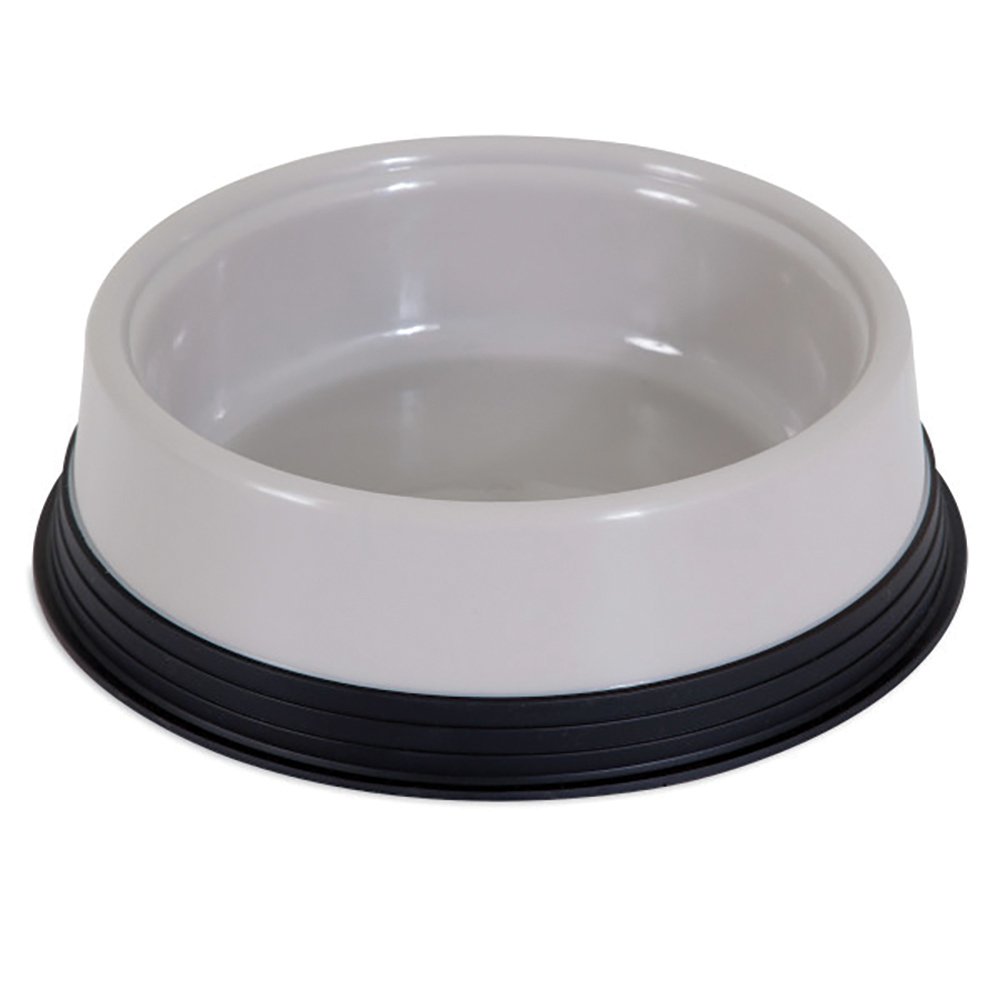
The JW Non-Slip Dog Feeding Bowl, Jumbo ($21.95) is a non-slip bowl, so it stays put when your dog pushes in with their face. It stops a light bowl sliding on a smooth floor, so your dog isn't chasing dinner across the room.
A mat that defines the feeding spot
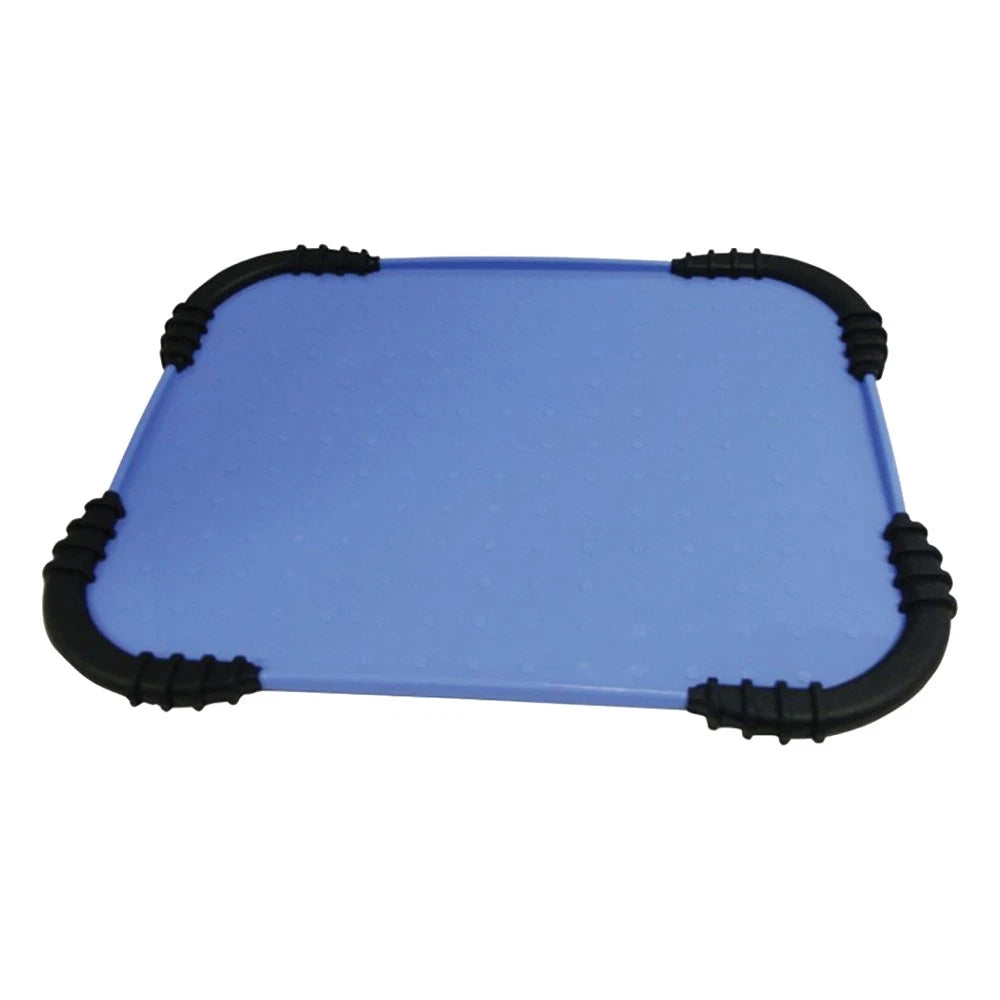
The JW Anti-Slip Dog Feeding Mat ($26.95) is an anti-slip mat that goes under the bowls, so the feeding spot stays in one zone and dropped kibble and drips land on the mat, not the tiles. It's the one we'd pick if both food and water bowls are moving.
A cheaper placemat option
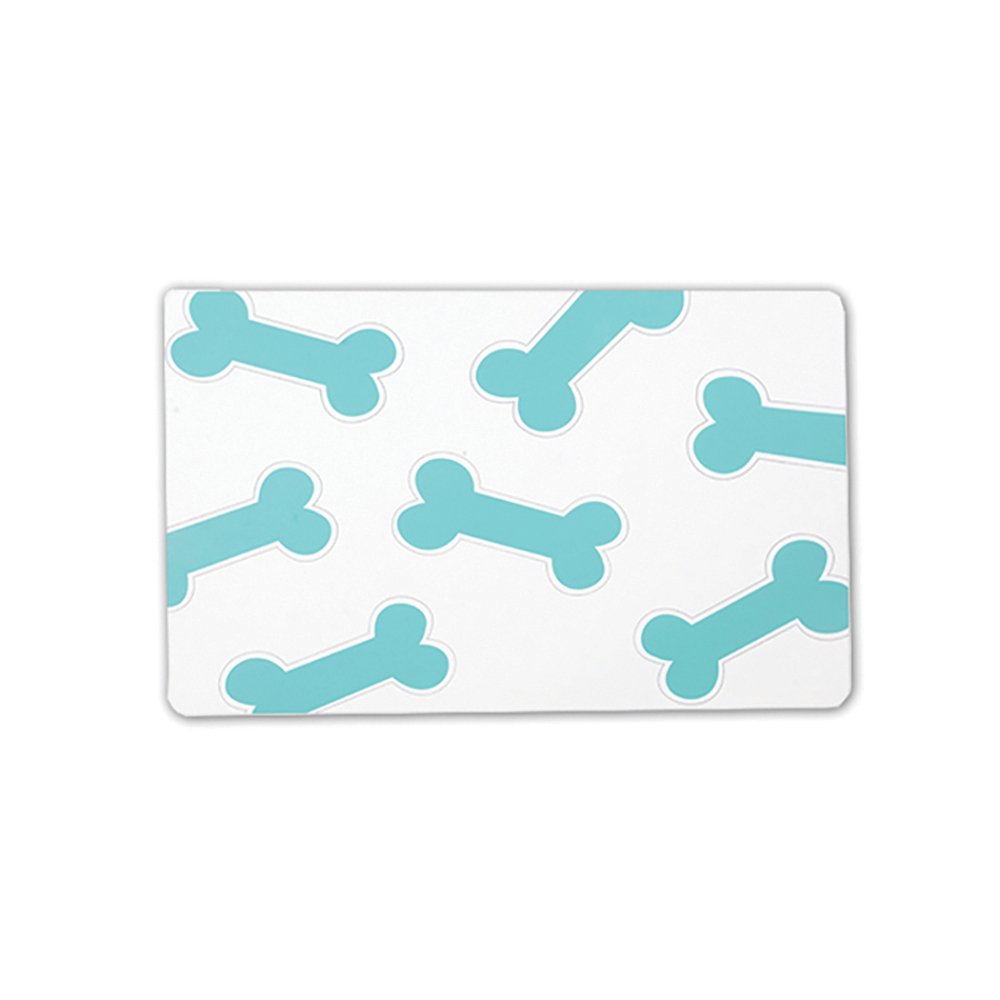
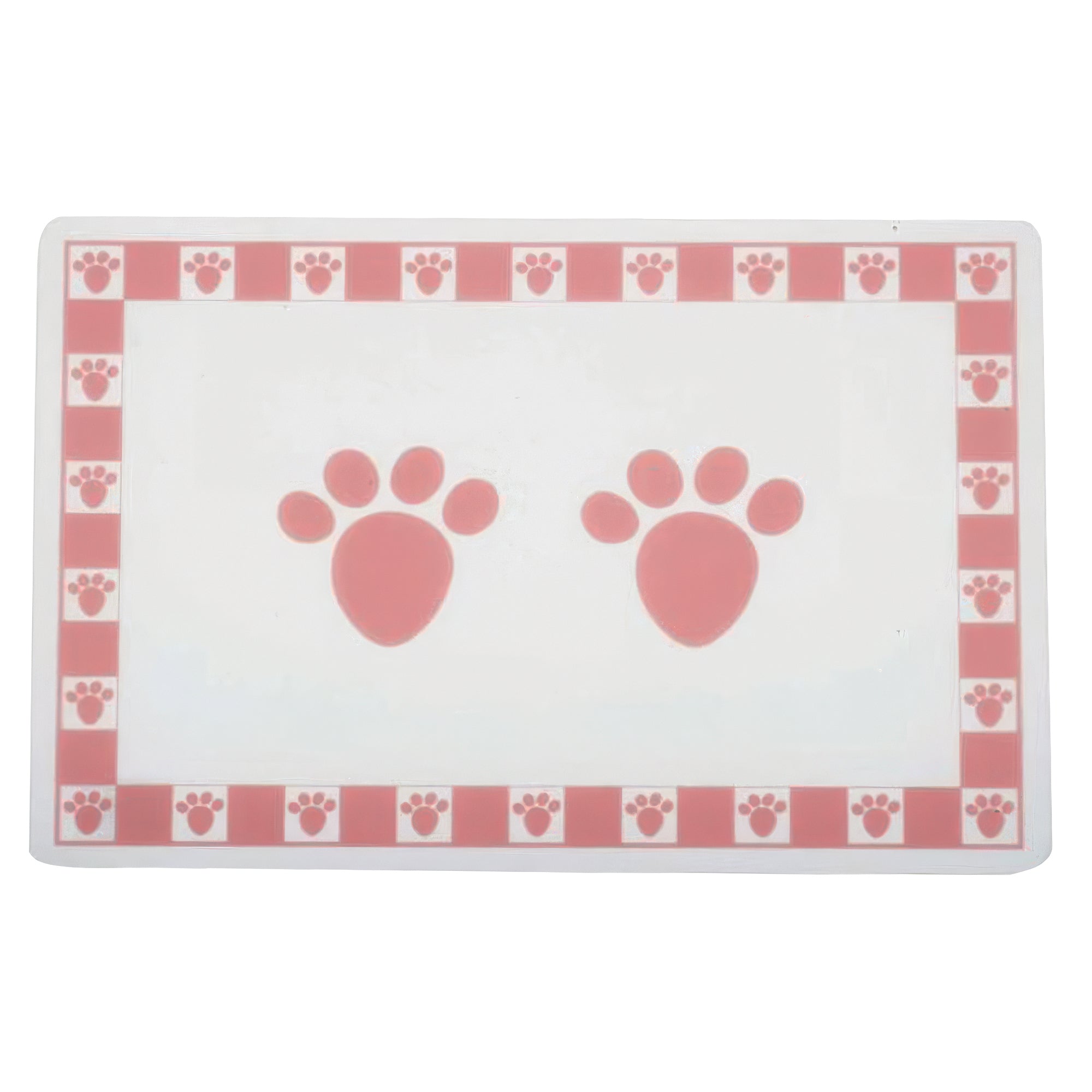
If you only need something under one bowl, the Petrageous Non-Slip Dog Food Bowl Placemat, Bones Print ($25.95) and Petrageous Non-Slip Dog Food Bowl Placemat, Pink Paws ($25.95) are non-slip placemats that give the feeding spot one defined place.
There's no bundle for this problem. The bowl and a mat together cover most homes.
If your dog also inhales dinner in seconds, read our Eats too fast page, because fast eating and bowl pushing often turn up together. And if the water bowl is the one getting emptied and spilled, see Water bowl runs low.
Step by step
- Day 1: Watch one meal. Put dinner down as usual and just watch. Note whether the bowl moves at the start (play) or at the end (chasing the last pieces), and whether food falls out of their mouth while chewing. If you see anything from the vet list above, book that in first.
- Day 1: Pick one spot. Choose a corner or a stretch of wall on a hard, wipeable floor, away from busy walkways. Feed there every time from now on.
- Day 1: Set it up. Put the mat down, then the bowl on the mat, pushed back against the wall. Put the water bowl on the same mat or nearby on its own placemat.
- Days 2 to 3: Check the bowl suits their face. If your dog keeps pushing to reach the bottom, the bowl may be too deep or narrow for a short face. A wider, shallower bowl lets them reach the food without shoving.
- Days 2 to 7: Stay calm and neutral. Don't react when the bowl moves or when an empty bowl is pushed at you. Lift it away quietly once they've finished and walked off.
- Week 1: Keep the routine the same. Same spot, same time, same set-up. Dogs settle into mealtime faster when nothing changes.
- Week 1: Clean up after each meal. Wipe the mat and the floor around it. Food and moisture in face folds is worth wiping away too, gently, as part of the routine. Ask your vet how to care for your dog's folds if they look red or smell.
- Week 2: Review. If the bowl now stays put but there's still a lot of food on the floor, look at how they're chewing. Dropping food while chewing is on the vet list for a reason.
- Ongoing: Check the products. Rinse the mat and bowl regularly. If the bowl starts moving again, wipe the floor underneath, because dust or crumbs under the mat can stop it gripping.
Free plan
Free: The Bowl Set-Up Card. Printable, one page.
FAQ
Why does my dog push their food bowl around with their nose?
Often it's simply a flat-faced dog chasing the last pieces in a bowl that's too light or too deep. Some dogs also nudge bowls in play or because it has earned them attention before.
Why does my bulldog push the empty bowl at me?
Usually because it has worked before. If pushing the bowl gets a reaction or a top-up, they'll keep doing it, so lift the bowl away once they've finished and don't respond to the pushing.
Why does my Frenchie take food out of the bowl and eat it off the floor?
The floor may simply be easier for a short face to eat from than the bottom of a deep bowl. Try a wider, shallower bowl. If they're dropping food while chewing, have your vet check their teeth.
Is it normal for bulldogs to be messy eaters?
A bit of mess is common, since short-nosed dogs often have crowded or misaligned teeth and can find eating harder. A sudden increase in mess, or food falling out while they chew, is worth a vet visit.
Should my bulldog eat from a raised bowl?
Ask your vet first. A well-known study of large and giant breed dogs found raised feeding bowls were associated with a higher risk of a serious stomach condition. That study didn't include bulldogs, so your vet is the best person to advise on your dog.
How do I stop the water bowl spilling everywhere?
Put it on a non-slip mat against a wall, the same way as the food bowl, so it can't be pushed or tipped as easily. A mat also keeps the drips in one zone.
Does my bulldog push the bowl because they don't like the food?
Some dogs do sniff around and investigate after a food change, but there's no good evidence it's about taste. If they're eating less or leaving meals, talk to your vet.
Related guides
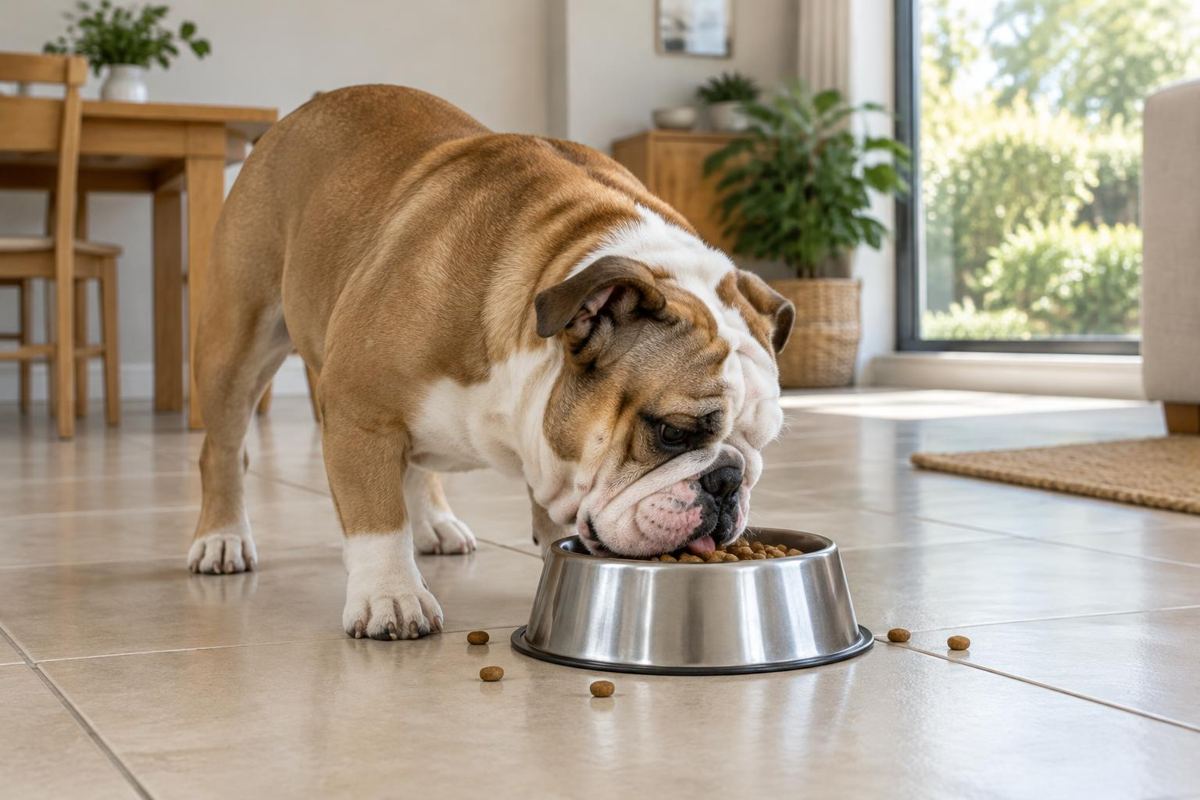
Eats too fast
Why does my bulldog eat so fast? (And what actually helps)
Most bulldogs eat fast out of habit or competition: they learned as puppies to beat their littermates to the food, or they're racing another pet in the house.
Read the guide →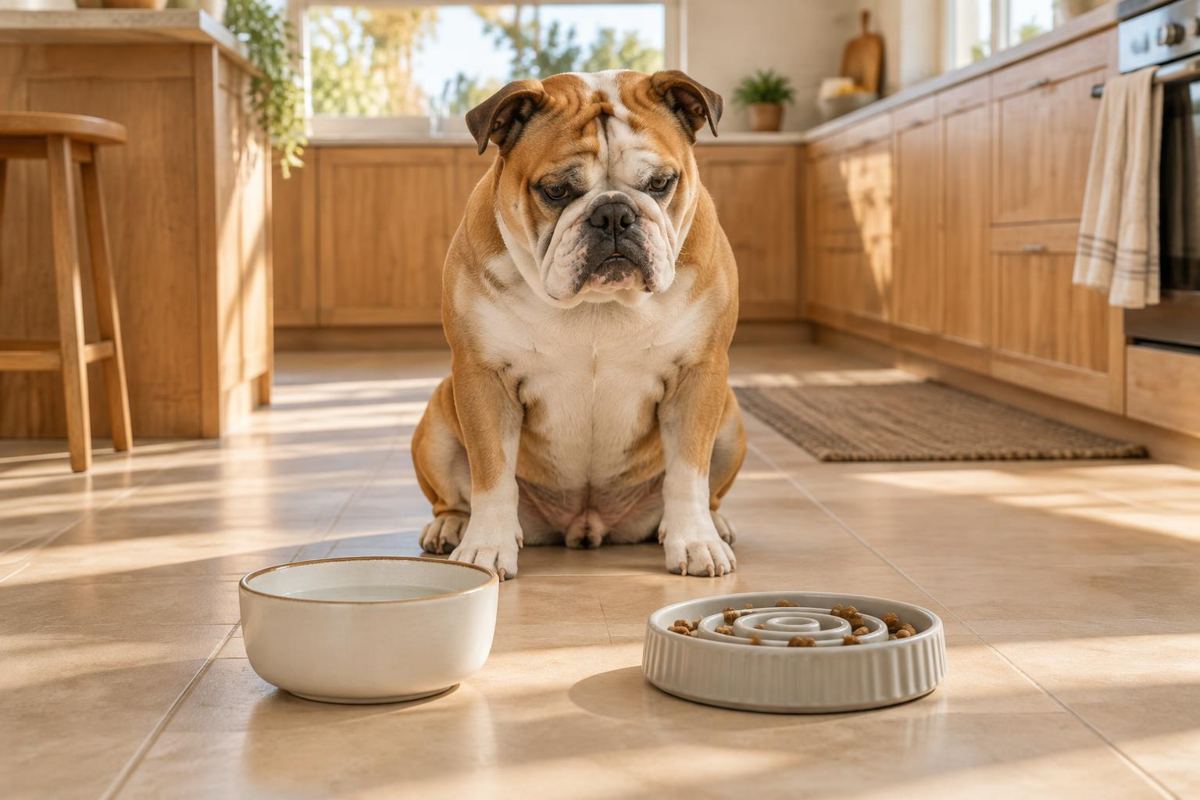
Eats too fast
How to Choose a Slow Feeder for Bulldogs, Frenchies & Pugs
Choose a slow feeder by accessible food channels, actual dimensions and your dog’s muzzle. Compare real bowls and supervise the first meals.
Read the guide →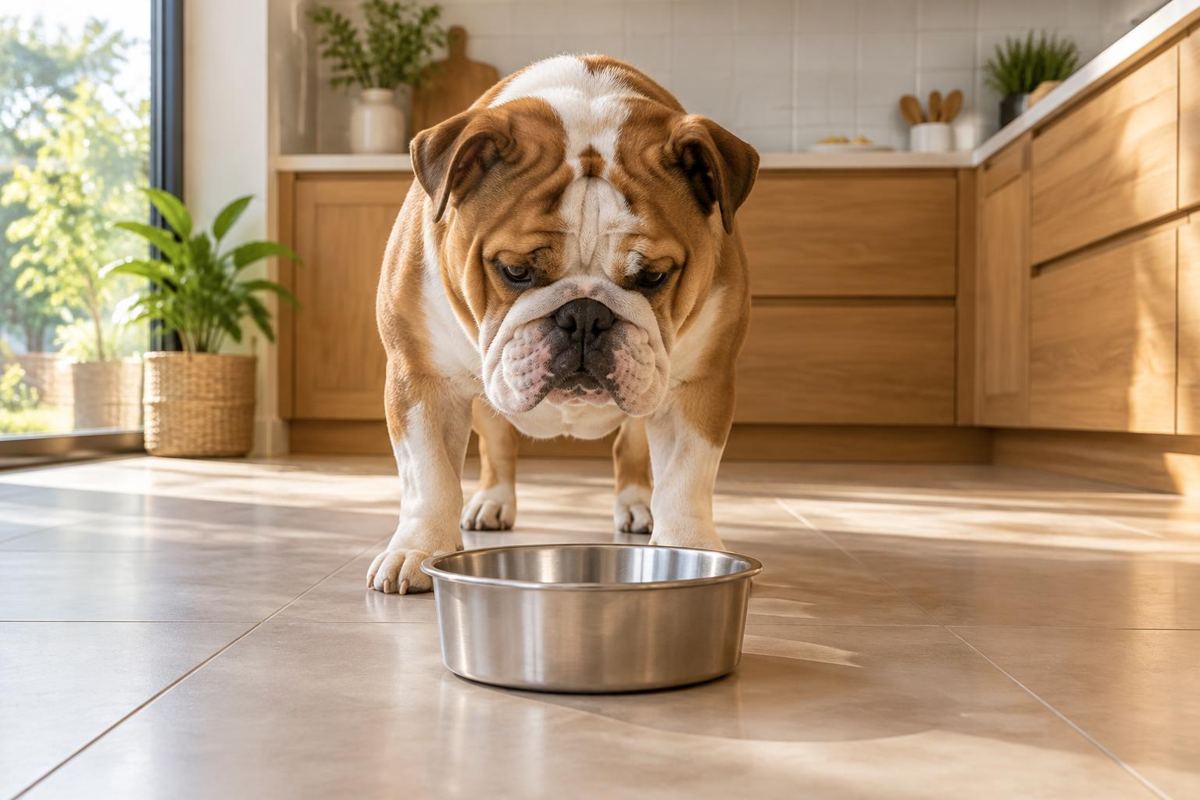
Water bowl runs low
Why is my bulldog's water bowl always empty? (And what actually helps)
Most of the time a bulldog's water bowl runs low because of hot weather, a bowl that is too small, and messy drinking that sends water onto the floor instead of into the dog.
Read the guide →Sources (6)
- Mar Vista Animal Medical Center, flat-faced breeds
- Bebel A, DVM, DAVDC, dentistry for flat-faced dogs (SVBC 2024 presentation, hosted by the Canadian Veterinary Medical Association)
- Ryu Y et al., "Initial screening for abnormalities identified by labial and buccal photographs in dogs and cats", American Journal of Veterinary Research, 2024 (via PubMed)
- VCA Animal Hospitals, "Pain in Dogs"
- Vetstreet, "Why Does My Dog... Push Around His Bowl?" (quoting Dr Leslie Larson Cooper, DVM, DACVB)
- Glickman LT et al., "Non-dietary risk factors for gastric dilatation-volvulus in large and giant breed dogs", JAVMA, 2000 (via PubMed)